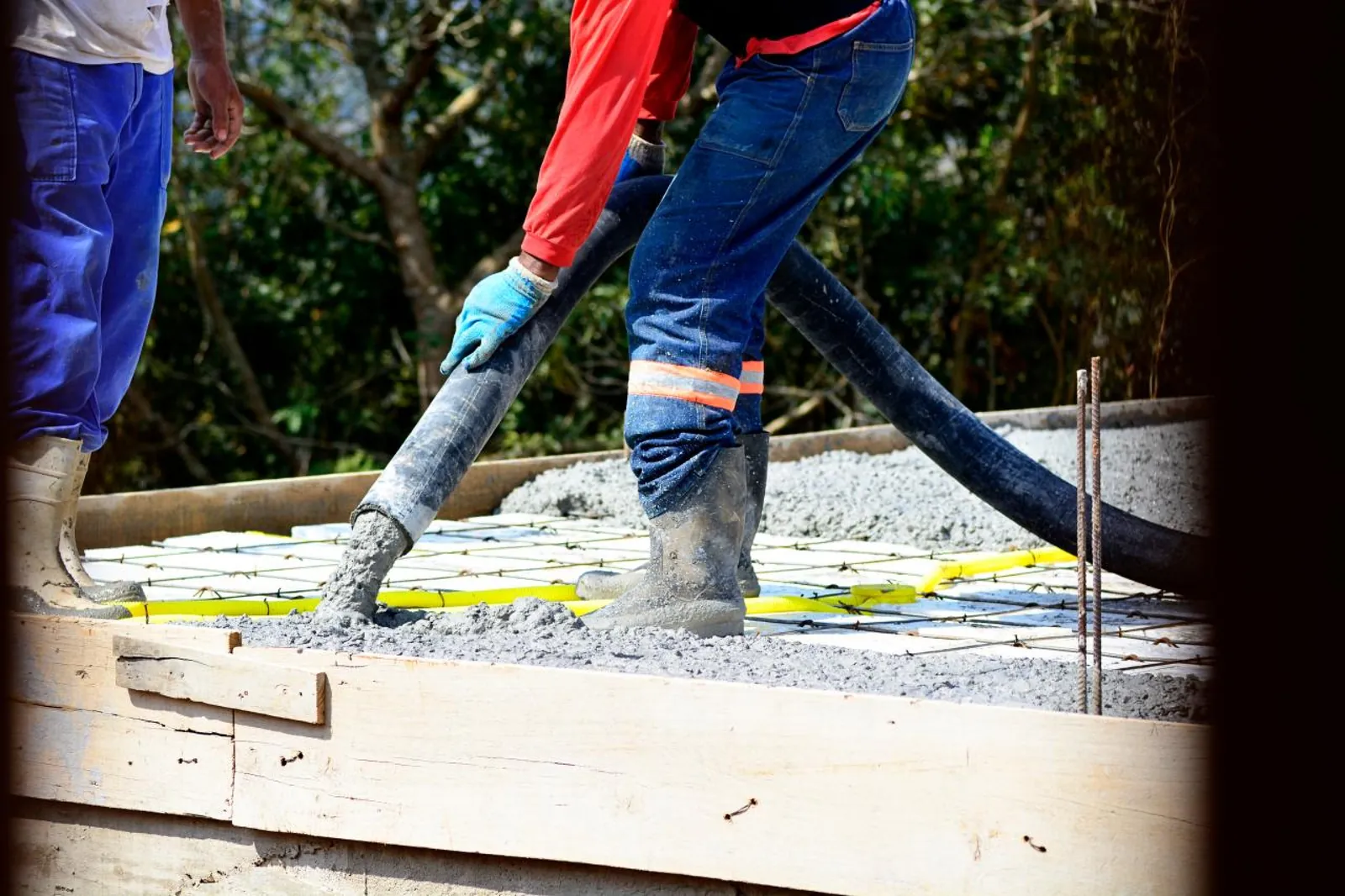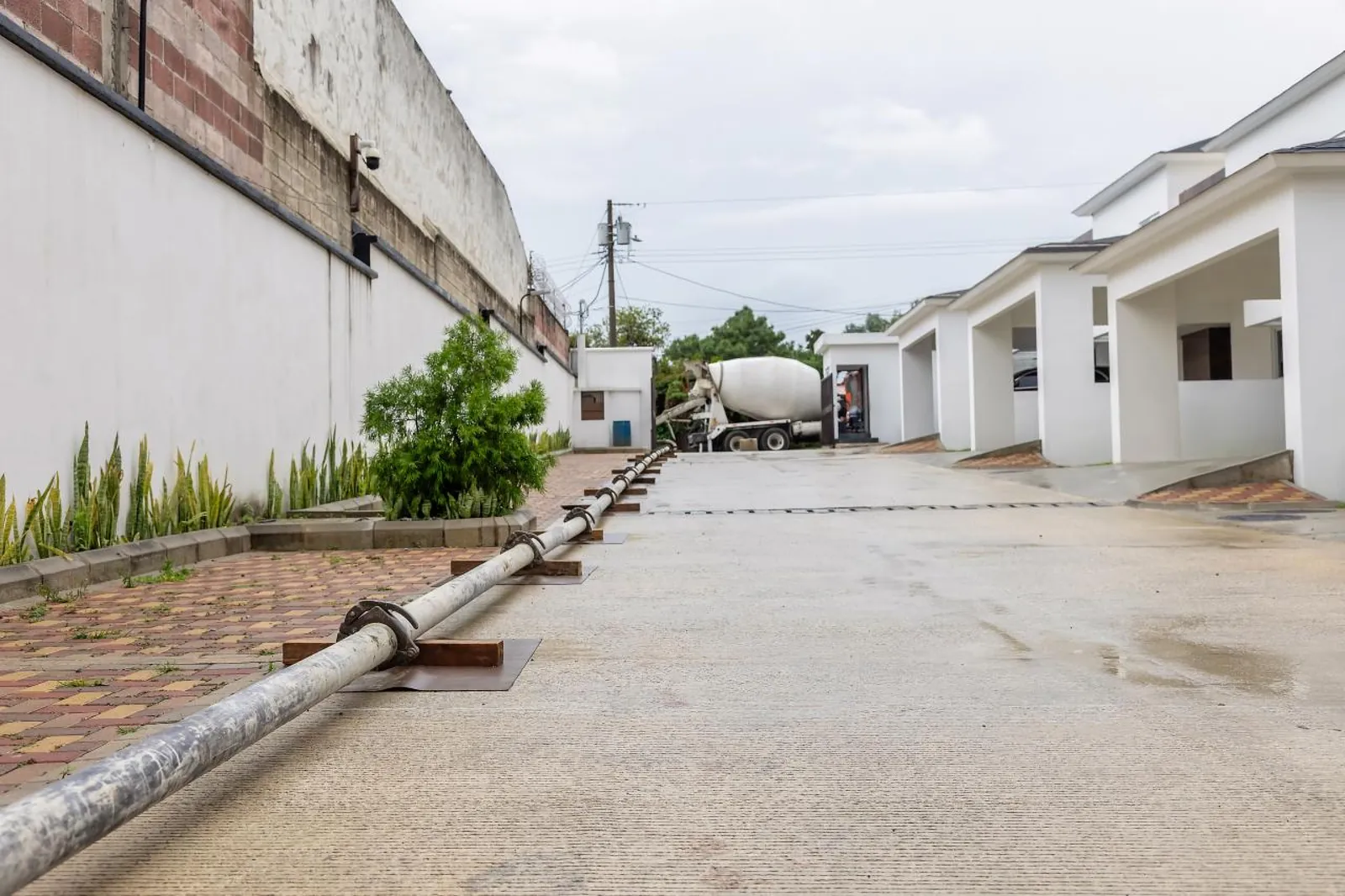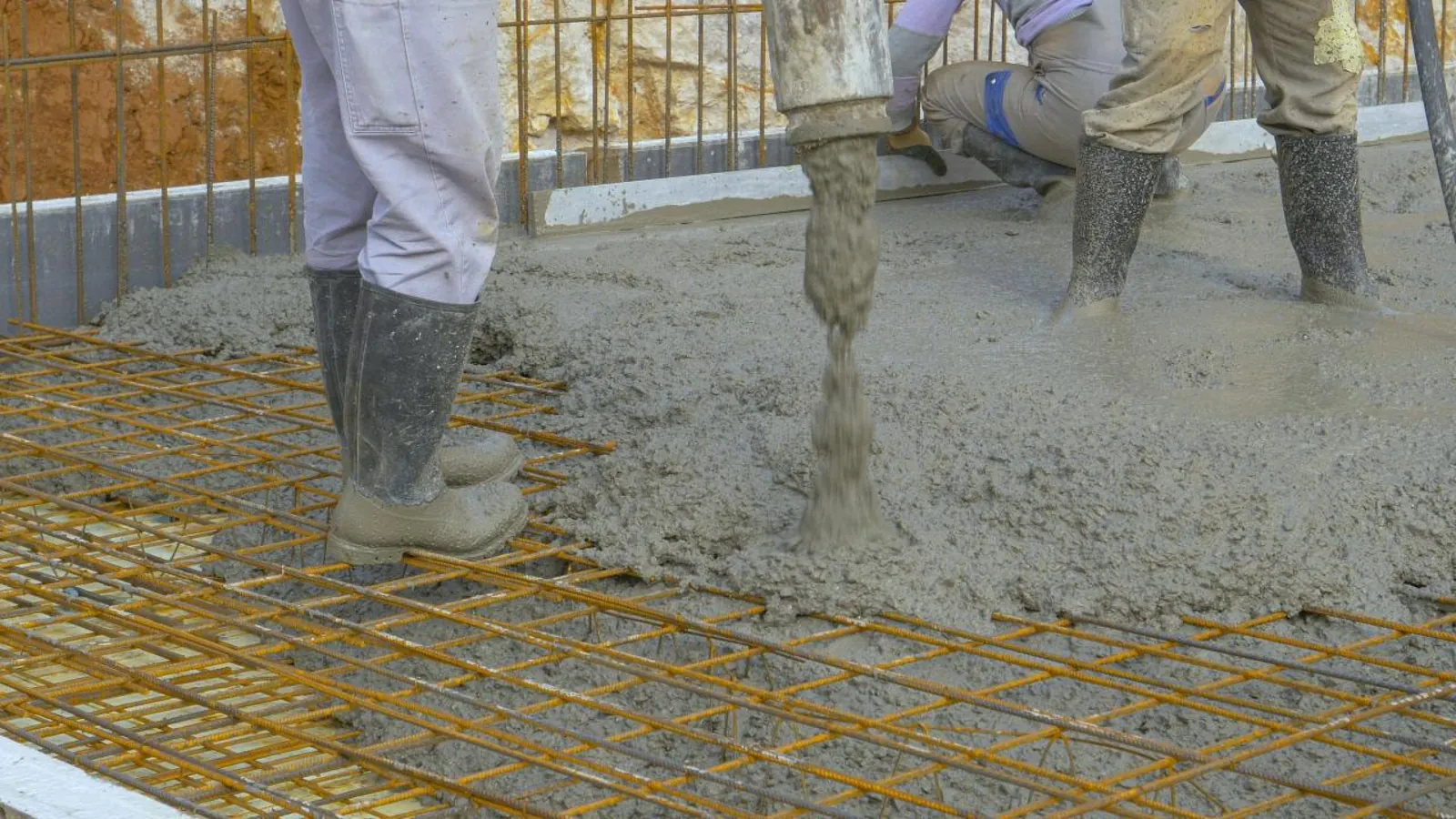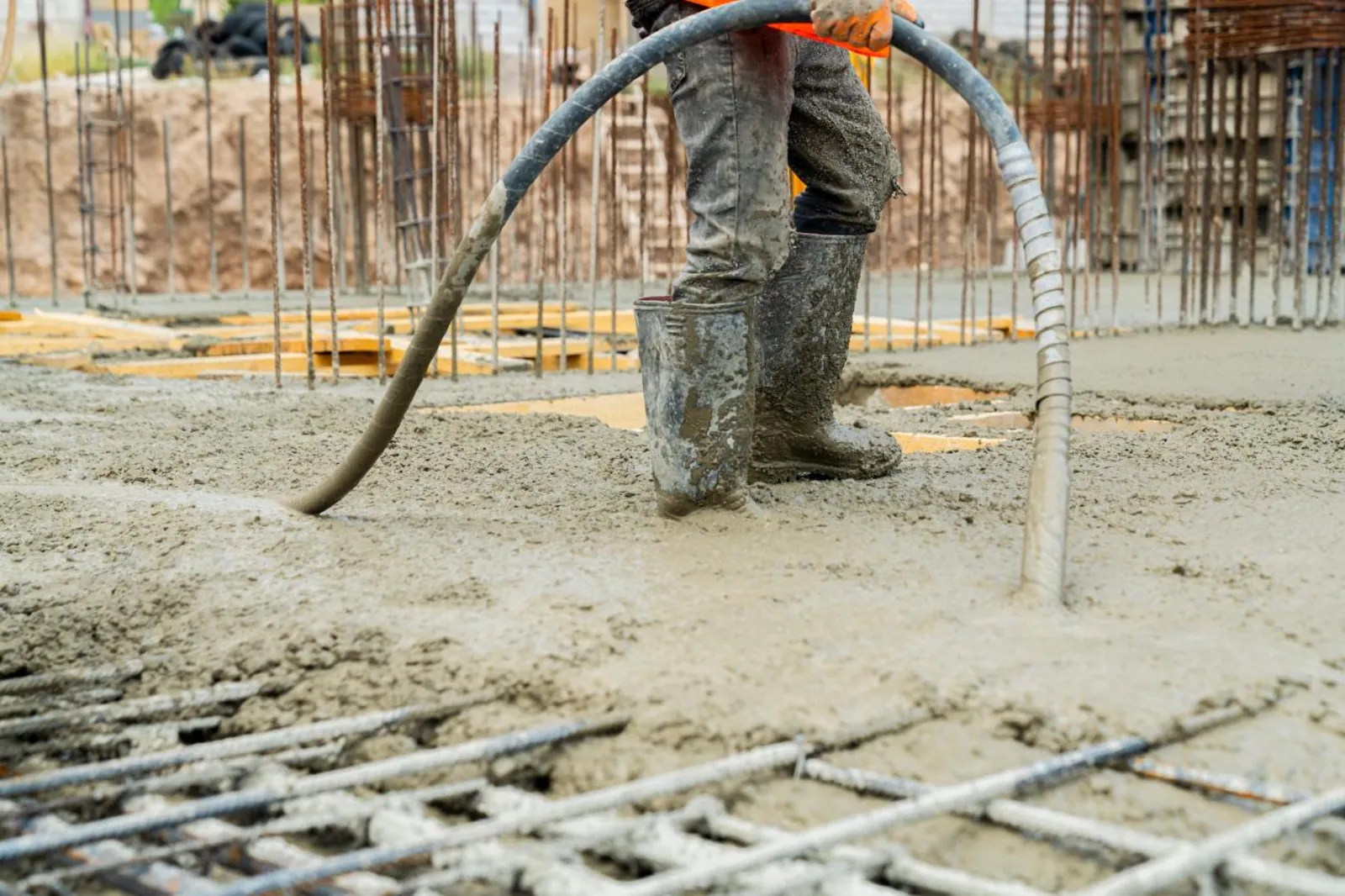
Do I need a concrete pump, or can the mixer lorry pour straight into the formwork? It is a fair question, and the honest answer is that not every job needs one. If the lorry can reach the pour with its chute, you may not. If the pour is behind the house, up a level, down a garden or along a narrow street, a pump usually saves time, labour and quality. This guide helps you decide.
Short answer: You probably don't need a pump if a mixer lorry can drive to within a few metres of the pour on firm ground. You usually do need one if the pour is out of chute reach, higher than the lorry, behind a building, on a slope or larger than a crew can barrow before the concrete stiffens.
Do I need a concrete pump? The quick check
You need a concrete pump when the mixer lorry cannot get its chute over the formwork safely.
A mixer lorry discharges through a chute at the back, the canaleta. It can swing from side to side and point downwards, and extension sections add a little length. That covers a pour a few metres from where the lorry stands, and only if the formwork is lower than the end of the chute. Everything beyond that has to be moved another way: by pump, by dumper, or by wheelbarrow.
So the first question is not about the concrete. It is about where a heavy lorry can stand, and how far that is from the pour.
- Can a loaded mixer lorry reach the site without tight bends, low branches or steep ramps?
- Is there firm ground for it to stand on, close to the formwork?
- Is the pour lower than the back of the lorry?
- Is the volume small enough to place before the concrete starts to stiffen?
If you answered yes to all four, the chute may be enough. If not, read on.
How far can a mixer lorry chute reach?
A mixer chute reaches a few metres behind the lorry, a little more with extensions, and it only works downhill.
Concrete runs down a chute by gravity. If the slab is level with the road, the angle is shallow and the concrete moves slowly. If the slab is above the road, a chute cannot help at all. And the lorry has to get close, which brings its own risks.
A loaded mixer lorry weighs many tonnes. Driving it onto a new driveway, over a kerb, across a soft garden or near a septic tank or a pool wall can cause more damage than the job is worth. On hillside plots the lorry may not be able to stop safely on the slope at all.
Signs you need a concrete pump
Distance, height, obstacles and volume are the four signs that a pump is the better route.
The pour is out of chute reach
A slab behind the house, a pool at the bottom of the garden or footings for an extension at the back all sit beyond any chute. Our truck-mounted static pump stays at the road and the line goes round the building.
The pour is higher than the lorry
Upper floors, roof terraces and raised patios need concrete pushed upwards. We pump up to 50 metres high.
Access is narrow or fragile
Gateways, steps, paths, walls, finished paving and planting all block a lorry. A line can be laid along a path or over a wall without touching the garden. For tight sites, see our narrow access concrete pumping service and the guide to concrete pumping with narrow access.
The volume is too large to barrow
Barrowing a few loads is fine. Barrowing several cubic metres means many trips, tired people and concrete stiffening in the drum, particularly in summer. If you are unsure of the volume, work it out first with how much concrete you need.
Pump, chute or wheelbarrows compared
Each method has its place, and the right one depends on distance, height and volume.
| Method | Suits | Limits |
|---|---|---|
| Mixer chute | Small pours right next to where the lorry can stand, below chute height | Reach of a few metres, downhill only, lorry must get close |
| Wheelbarrows or dumper | Very small volumes on a short, flat route | Slow, labour-heavy, risk of concrete stiffening and cold joints |
| Concrete pump with operator | Pours behind houses, at height, on slopes, with narrow access or larger volumes | Needs space for the pump lorry and a route for the line |
A pump also places concrete more evenly. It arrives at the formwork in a steady stream rather than in heaps, which helps your builder level and compact it properly. On walls and pool shells that matters for strength and finish.
Access on Costa Blanca plots
On the Costa Blanca, access is the main reason people who did not plan on a pump end up needing one.
Many villas sit on terraced hillside plots in urbanizaciones with steep, winding roads. Pools are often built below the house, reached by steps. In the older centres of towns like Benidorm and Calpe, streets are narrow and parking is tight. A mixer lorry may reach the gate but no further.
That is where a truck-mounted line pump earns its place. Our pump lorry is compact enough for narrow streets and the line does the rest, round corners, down steps and through gateways. We explain how a line pump differs from a boom in line pump vs boom pump.
Operator's tip: Stand where the lorry would stop and look at the pour. If you cannot see it, or it is uphill, plan on a pump. It is far easier to book one in advance than on the morning of the pour.
Is a concrete pump worth it compared with doing it by hand?
For most pours beyond chute reach, a pump is worth it because it saves labour and time and protects the quality of the concrete.
Barrowing looks cheaper on paper, but count the hands needed, the hours and the risk. Concrete starts to stiffen after it leaves the plant, faster in heat. If placing takes too long, you can end up with a cold joint, poor compaction or a surface that is hard to finish. Our guide to pouring concrete in hot weather explains why speed matters even more in summer.
With a pump, the same crew can concentrate on placing and levelling instead of carrying. The pour finishes sooner, the concrete is fresher when it is placed and the site stays cleaner. What the pump costs depends on volume, line length, access, height and extras, which our prices page explains without guesswork.
Do I need a concrete pump for my job? Decide in five steps
Work through these five steps and you will know whether a pump is needed.
- Measure the distance from where a mixer lorry can safely stand to the far edge of the pour.
- Check whether the pour is lower or higher than the back of the lorry.
- Walk the route the lorry would take and note bends, slopes, branches and soft ground.
- Work out the volume in cubic metres.
- Send us photos of the road, the gate and the pour, and we will tell you honestly whether a pump makes sense.
Typical jobs that do need one include driveways, patios and slabs away from the road, concrete for swimming pools and bases for stamped concrete, which we pour and stamp ourselves on smaller floors and with a regular partner on large areas. Our concrete pump hire always comes with our own operator, and we order the concrete from the batching plant and put it on the same quote.
When you have the details, ask for a fixed price. We can usually book a pour within three working days.
Frequently asked questions
Do I need a concrete pump for a small patio?
Not if a mixer lorry can stand right next to it on firm ground and the patio is below chute height. If it is behind the house or up some steps, a pump is usually the easier option.
How far can a concrete lorry pour?
A mixer chute reaches a few metres behind the lorry, a little more with extensions, and only downhill. Beyond that you need a pump or barrows.
Can a concrete pump reach my back garden?
Usually, yes. Our line pump stays at the road and runs pipe up to 400 metres horizontally and 50 metres high, round the house or through a gateway.
Is it cheaper to barrow concrete than to hire a pump?
For a very small volume close by, it can be. For larger pours or long routes, the labour, time and risk of poor concrete usually make a pump the better choice.
Will the mixer lorry damage my driveway?
A loaded mixer lorry is very heavy and can crack paving, kerbs or covers. With a pump, the lorry stays on the road and only the line crosses your property.