Concrete pumping with narrow access is a daily job on the Costa Blanca, where many villas sit on steep plots and the spot for the concrete is rarely next to the road. The mixer lorry can't get through the gate, the boom pump has nowhere to stand and barrowing would take all day. This guide explains how we solve that, what the pump and line can and can't do, and what to check before you book.
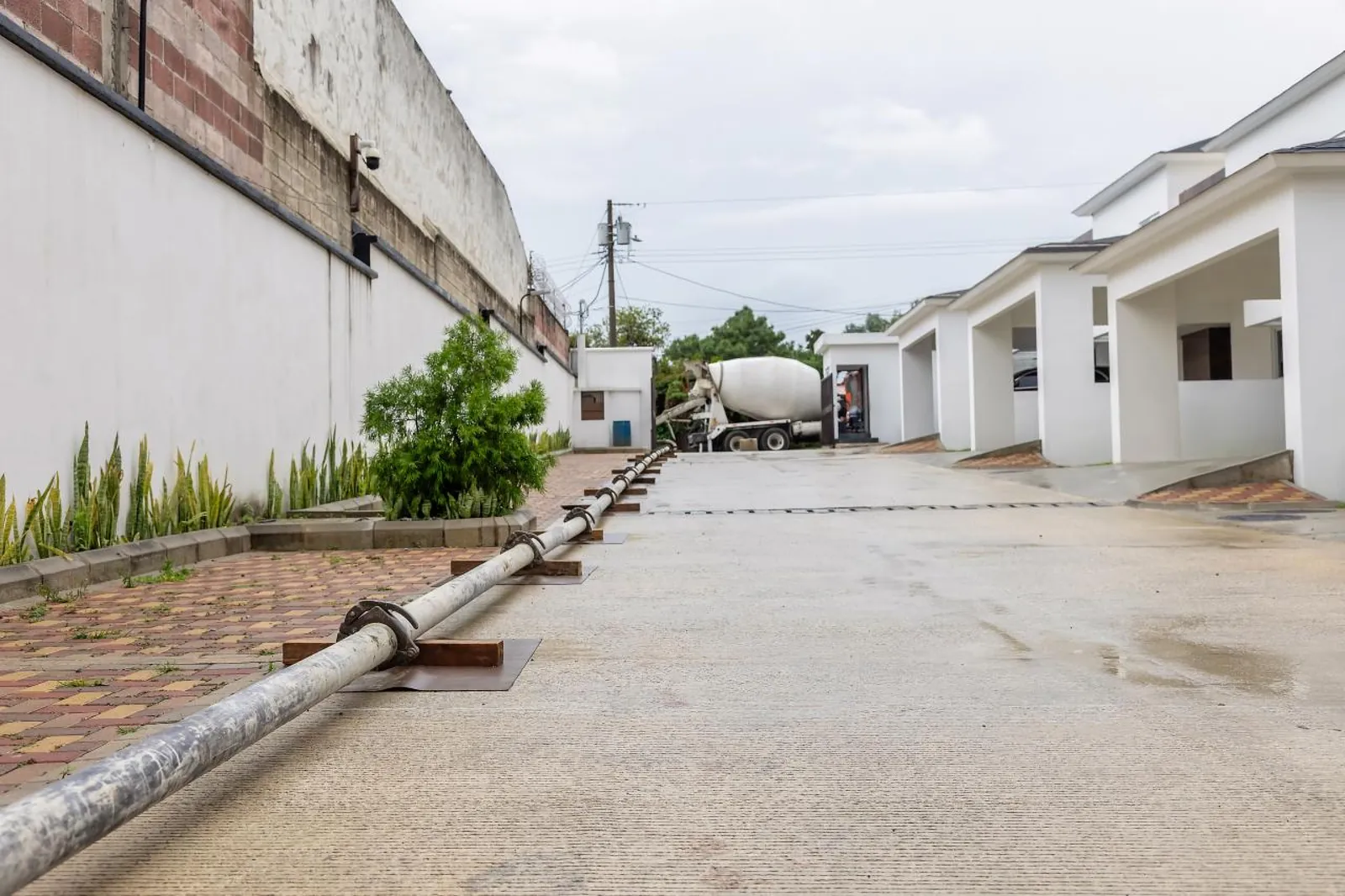
Short answer: With narrow access, the mixer lorry and our compact truck-mounted pump stay on the road, and a line carries the concrete through the gate, along the side path or down the garden to the pour. The line runs up to 400 metres and pumps up to 50 metres high. A few photos of the street, gate and pour area are usually enough to confirm it works.
Why is narrow access so common on the Costa Blanca?
Narrow access is common here because many villas were built on hillsides, along winding urbanisation roads and in old town streets never designed for lorries.
Drive round the hills above Altea, Jávea, Moraira or La Nucía and you see the pattern. Steep lanes with tight bends, a gateway barely wider than a car, the house at the top of the plot and the pool on a terrace below. In the old towns, the streets are narrow, often stepped and sometimes closed to traffic altogether.
Add parked cars, overhanging trees and low cables, and it is easy to see why a standard concrete delivery so often stops short. For owners planning a pool, patio or extension, the question is not whether the concrete can be made, but how it gets to the right spot.
How concrete pumping with narrow access works
The pump stands as close as it can, the mixer lorry feeds it, and a line carries the concrete the rest of the way.
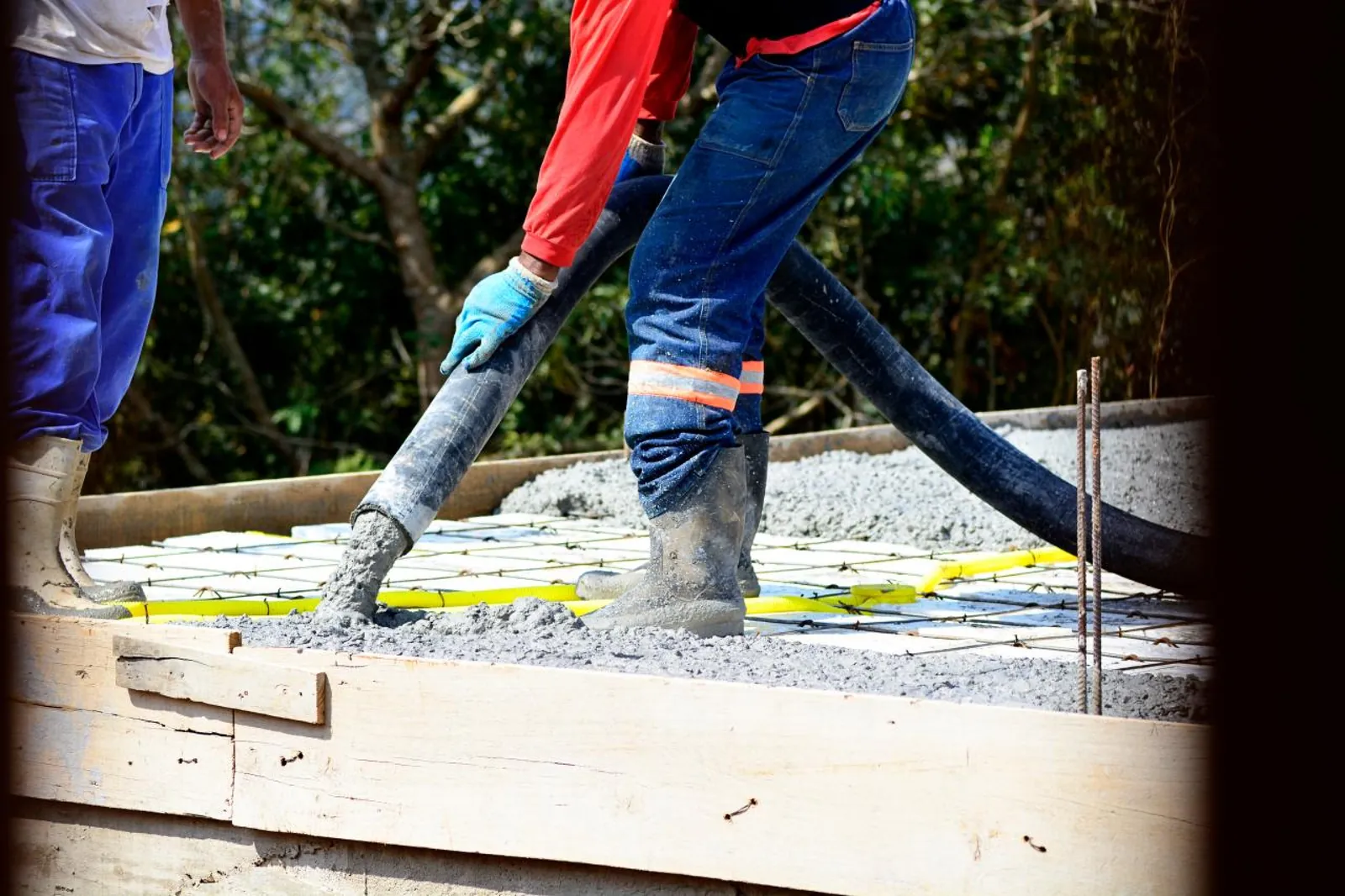
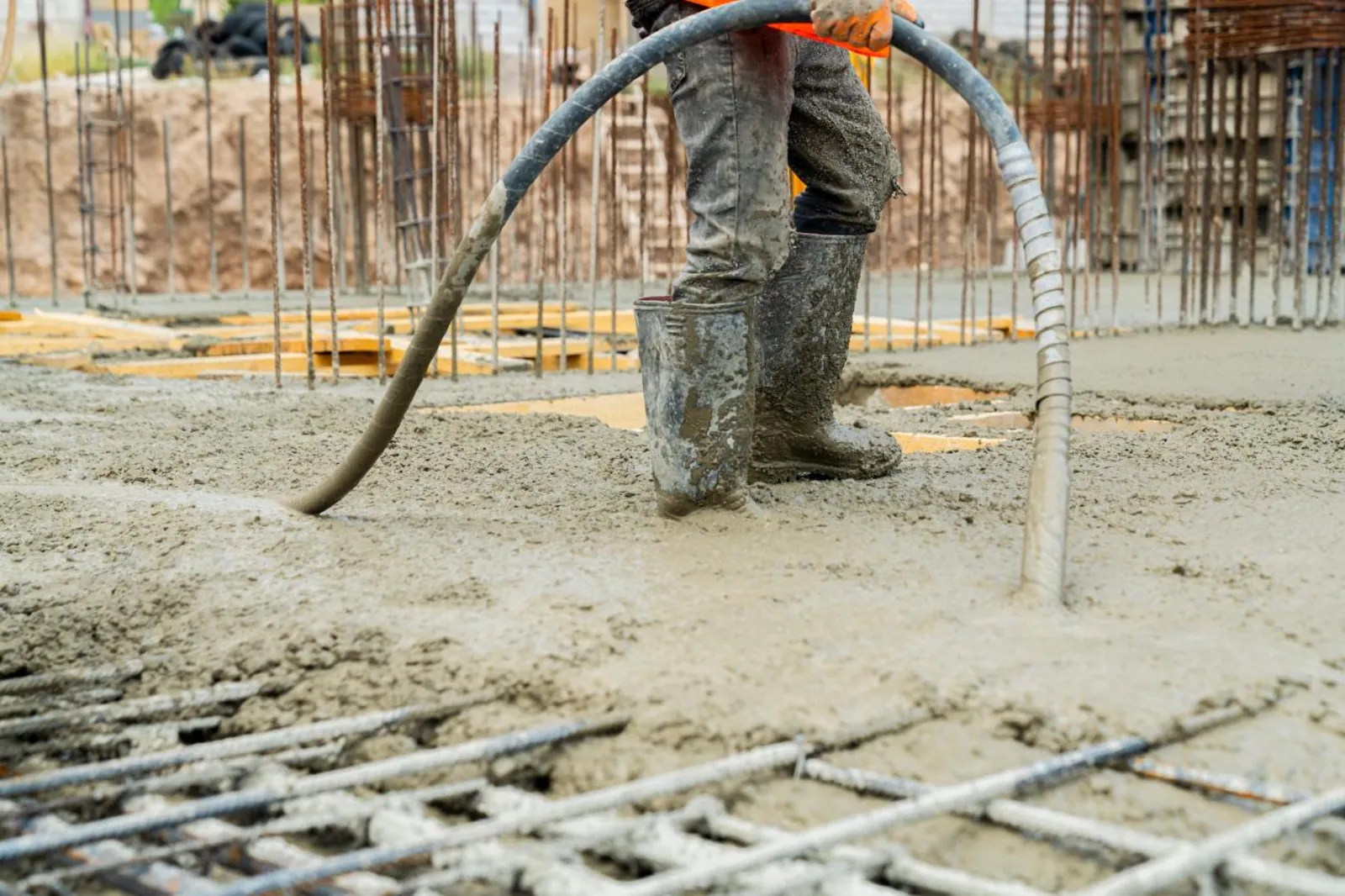
Our pump is a compact Putzmeister static pump mounted on a lorry. It needs much less room than a boom pump: no outriggers spread across the road and no space to swing an arm. Once it is set up, our operator lays the line by hand, section by section, to wherever the concrete has to go.
The line can follow almost any route a person can walk: through a gateway, along a side path, down steps, over a low wall, through a garage or up to a roof terrace. Because it is laid by hand, the route can turn corners that a boom could never reach round.
For a full picture of the machine, see our page on narrow access concrete pump hire. Our guide on line pump vs boom pump explains the difference between the two types honestly, including when a boom is the better choice.
Typical narrow access situations and how they are solved
Most tight sites fall into a handful of familiar situations, each with a standard way to route the line.
| Situation | Where the pump stands | How the line runs |
|---|---|---|
| Pool on a lower terrace | On the road or drive by the gate | Through the gate and down the garden steps |
| Patio behind the house | In front of the house | Along the side path or through the garage |
| Roof terrace or upper floor | Next to the building | Up the façade or stairwell, up to 50 metres high |
| Town house in an old centre | On the nearest street the lorry can reach | Along the street and through the front door |
| Long garden or plot at the end of a track | Where the track is firm and wide enough | Along the track, up to 400 metres in total |
Typical narrow access jobs include concrete for a pool shell and a driveway or patio slab at the back of a villa.
Pump, boom or barrows: which suits a tight site?
On a tight site a line pump is usually the practical choice: a boom needs too much room, and barrows take too long.
A boom pump is fast and useful on open sites, but it needs a wide, level, firm spot and clear space overhead. On a narrow lane with cables and trees, that is often impossible. Barrows and a small mixer work for tiny amounts, but a few cubic metres up and down a steep garden take a team of people and many hours.
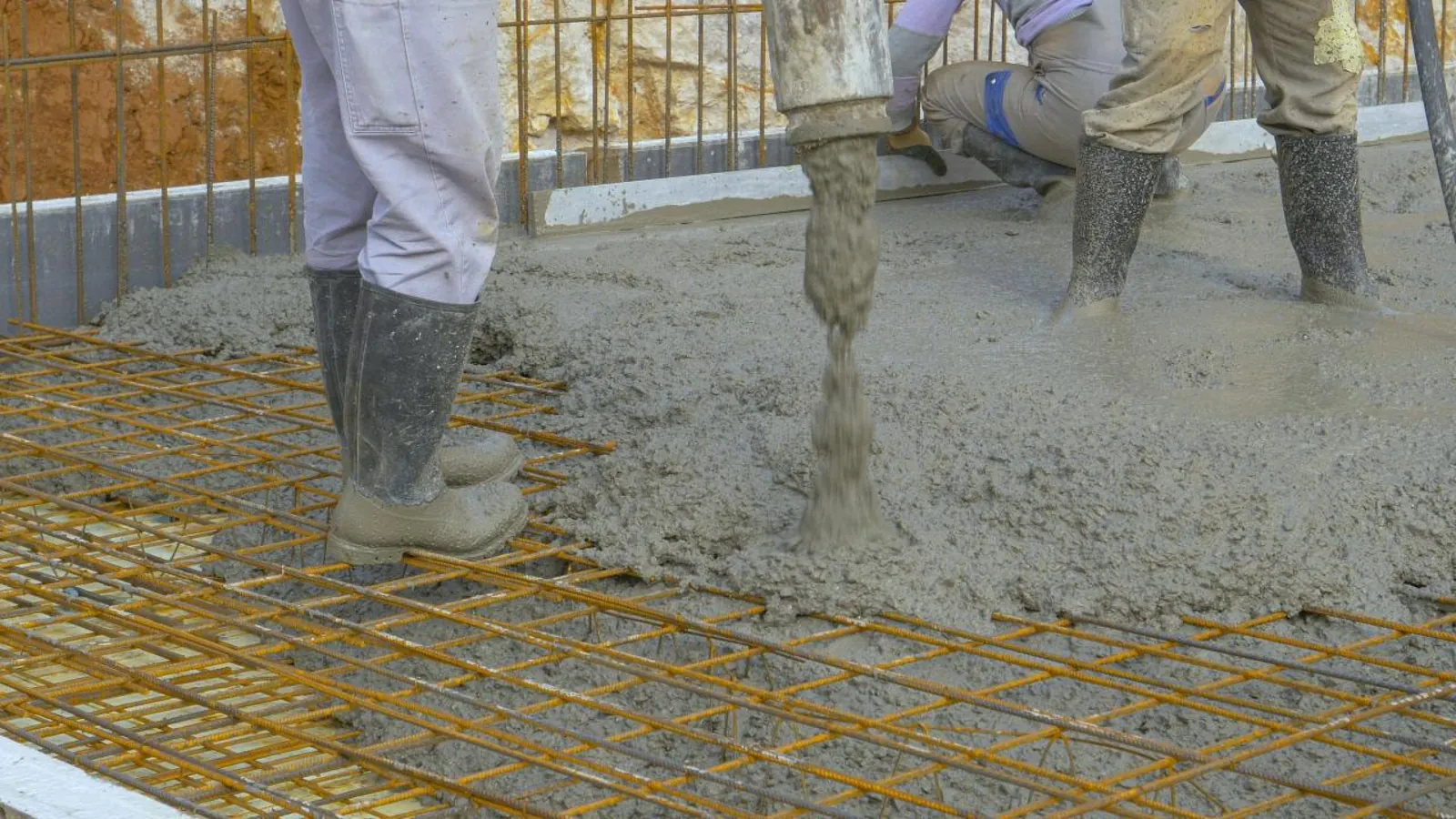
The concrete also suffers. With barrowing, the first loads begin to set while you are still placing the last, and the joins can show. With a pump, the concrete arrives fresh and evenly, so the slab can be levelled and finished in one go. Our article do I need a concrete pump goes through the trade-off in more detail.
Don and Ari came on time very clean and a pleasure to work with
Pro fix Costa blanca
How to check your access before you book
A handful of photos from the street to the pour area tells us almost everything about where the pump can stand and how the line will run.
- The street in front of the property, in both directions, showing width, bends and parked cars.
- The entrance: gate, drive or path, with something for scale.
- The route from the entrance to the pour: side paths, steps, walls, corners.
- The pour area itself: formwork, trench or room.
- Anything overhead: cables, balconies, branches.
- A pin of the location, plus the rough size of the pour.
If you are not sure of the volume, our guide on how much concrete you need shows how to calculate it. With the photos and the volume, we can confirm the set-up and give you a fixed price.
Operator's tip: Walk the route the line will take and take a photo at every corner and step. A tight turn in a side path is easy for a line, but we like to know about it before the day.
Parking on the street and the neighbours
When the pump and mixer have to stand on a public road, the street may need to be kept partly clear, and some town halls ask for permission to occupy the road.
The rules differ by municipality. In some places a short stop on a quiet lane needs nothing; in a busy old centre the ayuntamiento or the policía local may want an application for occupying the public road. Your builder usually knows how it works locally. If you are running the job yourself, ask the town hall in good time. Our article on planning permission in Spain explains the wider permit picture.
A word with the neighbours helps too. Tell them the date and the rough time, ask them to keep cars out of the way for an hour or two, and the day goes far more smoothly. We often coordinate between owner, builder and plant in English and Spanish, which saves misunderstandings on the day.
Protecting the house and garden
The pump stands on firm ground and the line is laid by hand, with protection where the route crosses paving, steps or planting.
Before the pour, clear the route of loose pots and furniture and point out anything fragile. Boards or sheets protect tiles and steps where the line rests. At the end, our operator cleans out the pump and lines and makes sure the street and your drive are washed down. That clean-up is one of the things customers mention most in their reviews.
Inside the plot, think about where the washout goes. It should not end up in the pool, a drain or a flower bed. Agree a spot beforehand.
Price and booking for a narrow access pour
The price for concrete pumping with narrow access depends mainly on the volume, the line length, the height and the set-up time.
A longer line takes longer to lay and clean, and a route up several floors or down a steep garden adds to the work. Our page on what affects concrete pump prices explains each factor. You get one fixed price for the pump, operator, lines, setting up and cleaning up; we order the concrete from the plant and put it on the same quote. For standard sites, see our concrete pump hire with operator.
Send your photos on WhatsApp to +34 633 361 962 or request a quote for a tight site. We can usually book the pour within three working days. Our base is in La Nucía, central to the Marina Baixa and Marina Alta.
Frequently asked questions
How far can a concrete pump reach through a garden?
Our line pumps up to 400 metres horizontally and up to 50 metres high. The route can turn corners, go down steps and through gates.
Can a concrete pump go through a house?
Yes, the line can run through a garage, hallway or front door if that is the only route. We protect floors where the line rests.
What if the lorry can't get up my street?
The mixer and pump stop at the nearest point they can reach safely, and the line covers the rest. Send us photos of the street and we will tell you where that is.
Do I need permission to park a concrete pump on the road?
That depends on the town hall and the street. Some ayuntamientos ask for an application to occupy the public road, so check locally in good time.
Is pumping worth it for a small amount of concrete?
Often, yes. On a tight site the hours saved compared with barrowing, and the better finish from one continuous pour, are the main gains.