How does a concrete pump work, and why should it matter to you when your slab or pool is being poured? A concrete pump pushes fresh concrete through a closed steel line using two hydraulic pistons that take turns, so the concrete keeps moving from the mixer lorry to the exact spot where it is needed. We run truck-mounted Putzmeister static pumps across the Costa Blanca every working day, and this guide explains the machine from the operator's side.
Short answer: The mixer lorry discharges into a hopper on the pump. Two pistons draw the concrete in and push it out in turn, through a swinging valve, into a line of steel pipes and hose that can run up to 400 metres horizontally or 50 metres up. The operator controls the flow by remote.
How does a concrete pump work, in plain terms?
A concrete pump works like a pair of very strong syringes that fill and empty one after the other.
While one cylinder sucks concrete out of the hopper, the other pushes its load into the line. Then they swap. A valve between the cylinders and the line switches over at the end of every stroke, so the line is always fed from one side or the other. The result is a steady, pulsing flow that you can feel if you rest a hand on the pipe.
Everything is driven by hydraulics. The diesel engine on the lorry runs a hydraulic pump, and oil under high pressure moves the pistons and the valve. That is how a machine can push heavy, stiff concrete through hundreds of metres of pipe. It is also why we only offer concrete pump hire with our own operator: the pressures involved are not something to learn on your own driveway.
The main parts of a concrete pump
A static concrete pump has five main parts: the hopper, the pumping cylinders, the transfer valve, the line and the controls.
| Part | What it does |
|---|---|
| Hopper | The open steel bin the mixer lorry discharges into. A grille keeps out oversized lumps and a turning agitator keeps the concrete mixed. |
| Pumping cylinders | Two cylinders with pistons, driven by hydraulic rams. One draws concrete in while the other pushes it out. |
| Transfer valve | On a Putzmeister this is an S-shaped tube that swings from one cylinder to the other at the end of each stroke. |
| Line | Steel pipes clamped together, usually with a flexible rubber hose at the end so the concrete can be placed by hand. |
| Controls | A remote control the operator carries, so he can start, stop and slow the flow while watching the pour. |
On our machines the whole set sits on a lorry. That is different from a boom pump, which carries a folding arm with the pipe built into it. We compare the two in detail in line pump vs boom pump.
From the mixer lorry to your slab, step by step
A pumped pour follows the same order every time: set up, prime, pump and clean.
- The pump lorry parks as close as the access allows, and the mixer lorry backs up to the hopper.
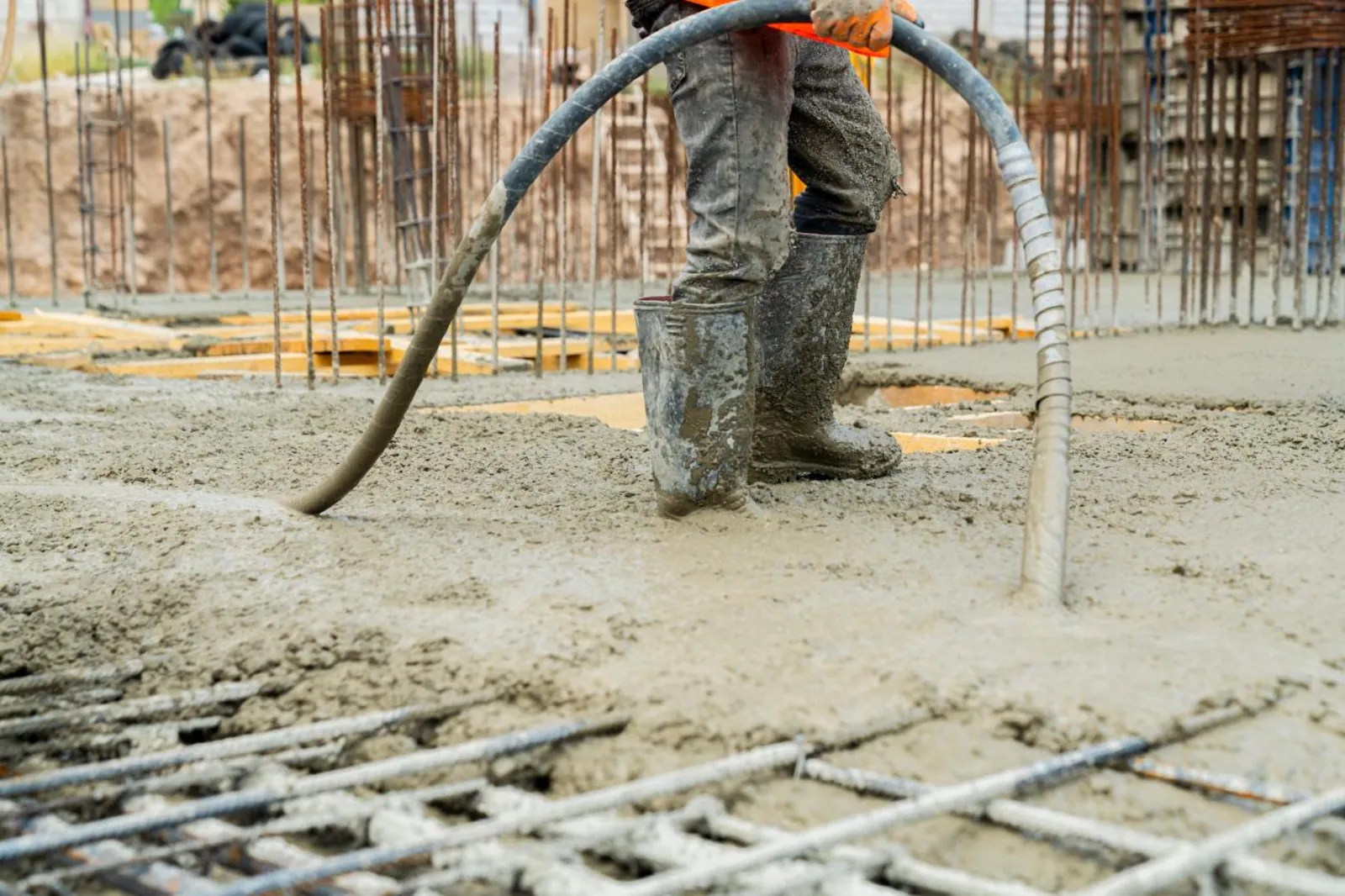
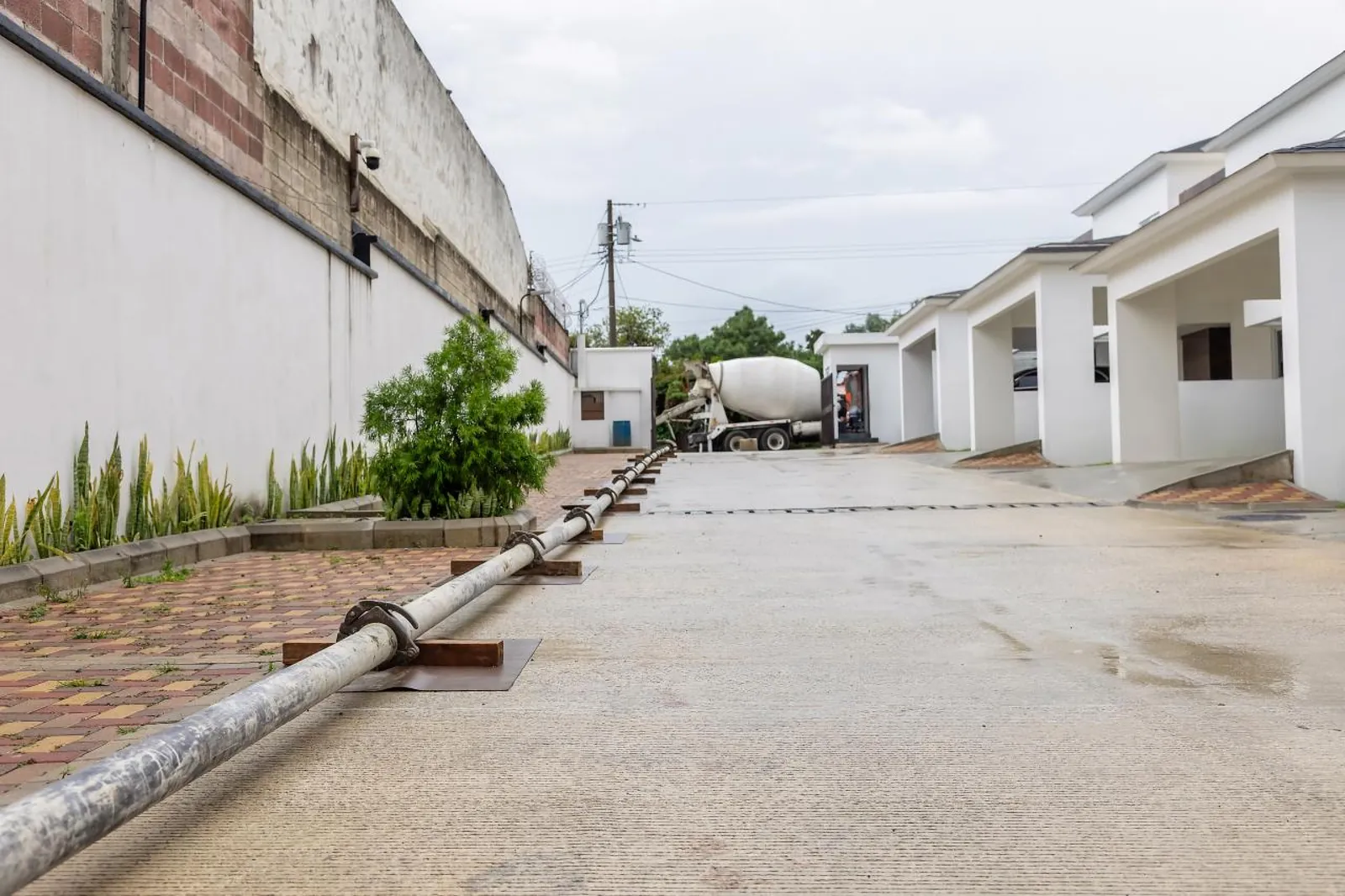
- The operator lays the line from the pump to the pour, round the house, through the garden or up the scaffold, and clamps every joint.
- A cement slurry, the lechada, goes through first. It coats the inside of the pipes so the concrete slides rather than sticks.
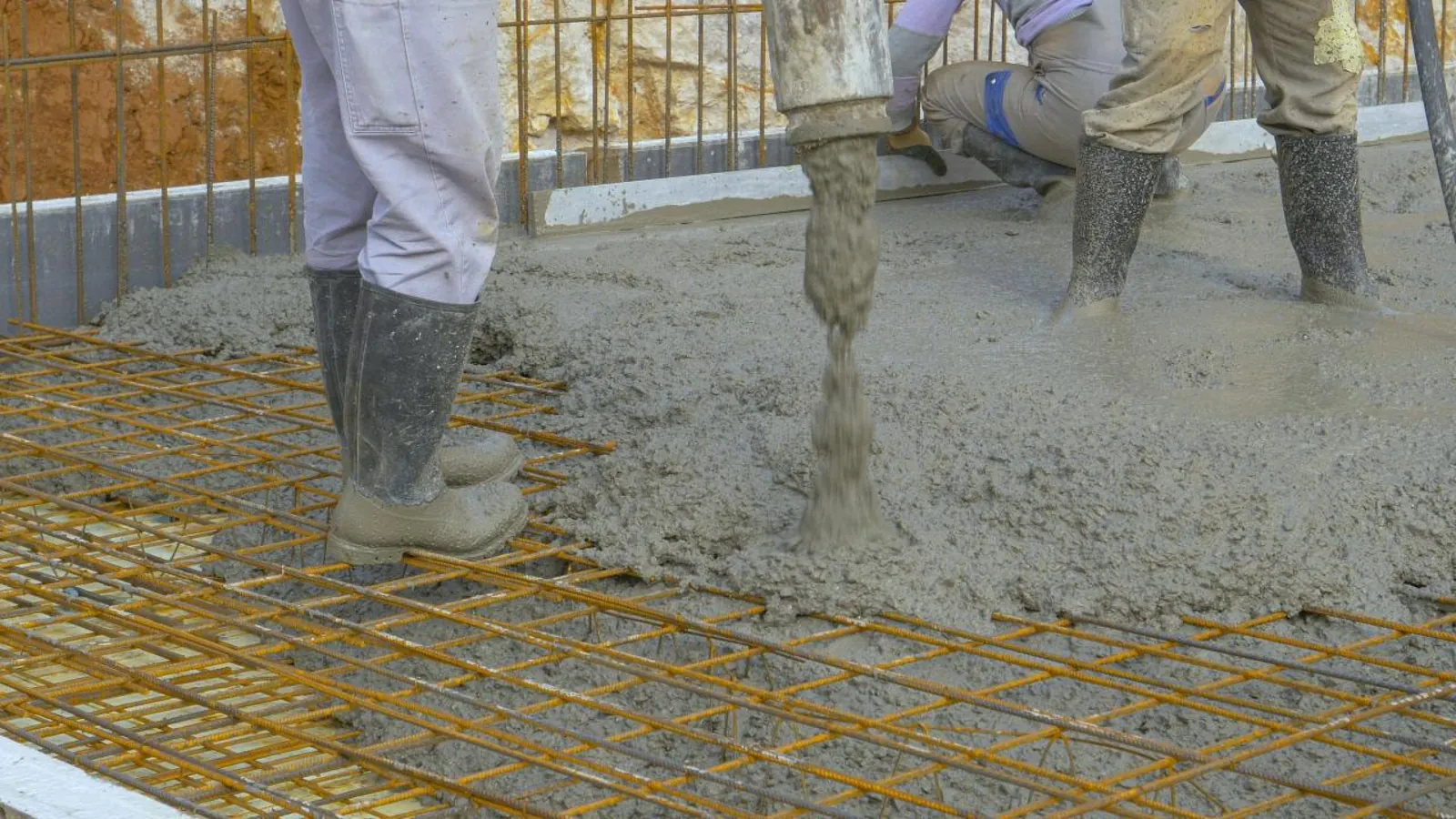
- The mixer discharges into the hopper and the operator starts pumping, watching the pressure and the flow.
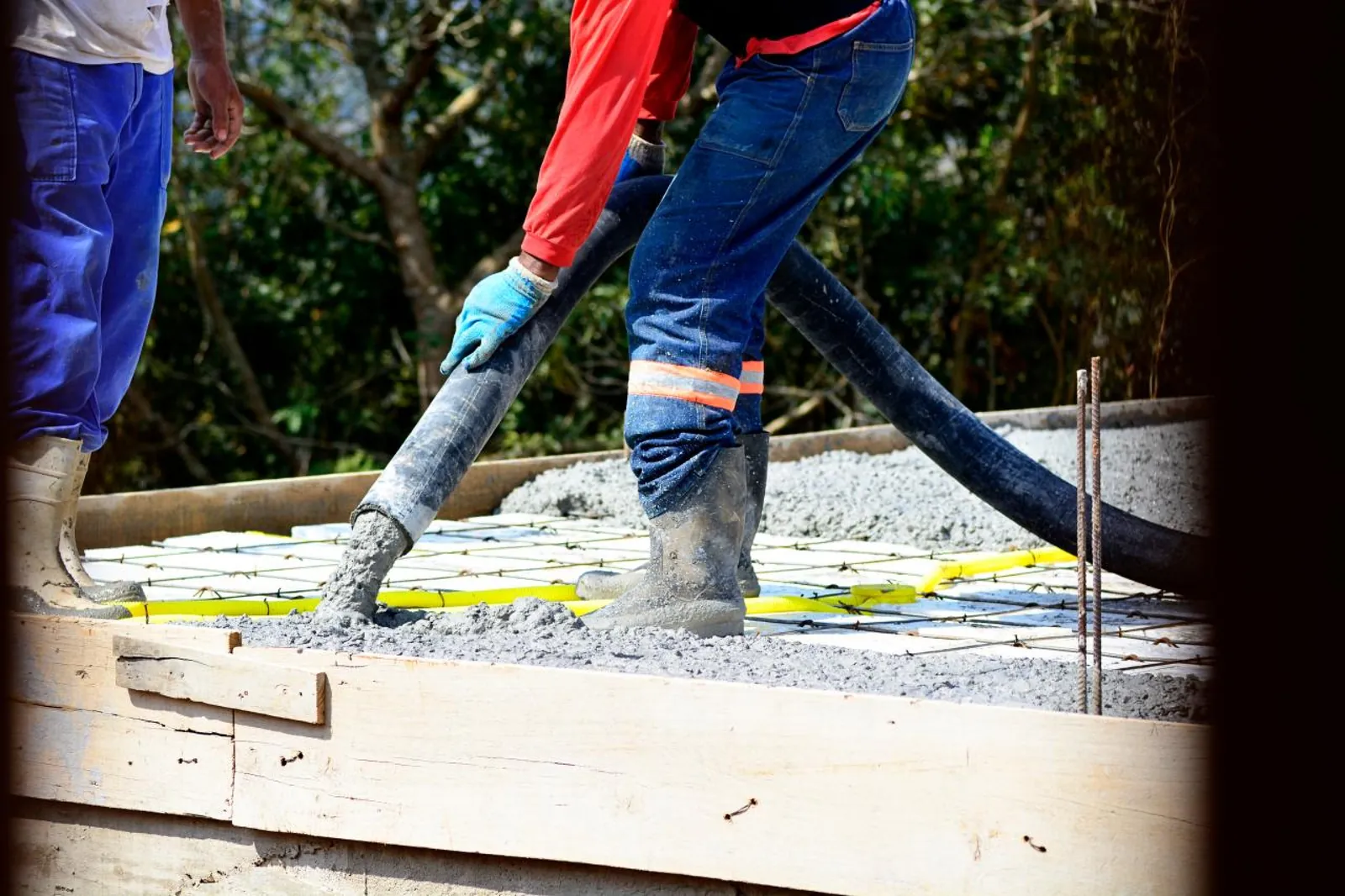
- Our second man places and levels the concrete at the end of the hose, with a laser for the height, while the operator sets the speed by remote. If you only hire the pump with an operator, your own team does this.
- When the pour is finished, the line is cleaned with water and a sponge ball pushed through the pipes, and the hopper is washed out.
The order matters. If the line is not primed, the first concrete loses water to the dry steel, stiffens and can block. If a joint is not tight, slurry leaks out and the same thing happens further down the line. Most blockages on any pump come from shortcuts at this stage.
The site has its part to play too. Formwork, reinforcement, and a clear route for the line all need to be ready before the first lorry arrives. Our concrete pour checklist lists what you or your builder should have in place.
Operator's tip: Keep the hose end moving and the lorries coming. A pump that stands idle for a long time with concrete in the line is the main cause of trouble, especially in summer.
Why the concrete mix matters for pumping
Not every concrete pumps well, so the mix is ordered with the pump in mind.
Concrete travels through a pipe on a thin film of cement paste against the steel. If the mix has too little fine material, or the stones are too large for the pipe, that film breaks down and the concrete jams. If the mix is too stiff, the pressure climbs. If it is far too wet, the stones can separate from the paste inside the line.
That is why we order the concrete from the batching plant ourselves and put it on the same quote. We tell the plant it is going through a pump, how long the line is and what it is for, so the consistency and aggregate size suit both the machine and the structure. Summer heat on the coast makes concrete stiffen faster, which is one more reason to time the lorries carefully. Our guide to pouring concrete in hot weather explains how we deal with it.
How far and how high can a concrete pump push?
Our truck-mounted static pumps reach up to 400 metres horizontally and up to 50 metres high, with an output of 16 to 18 m³ an hour.
Distance and height both cost pressure. Every metre of pipe adds friction, every bend adds more, and lifting concrete straight up is the hardest work of all. A good operator plans the route with as few bends as possible and chooses the right pipe for each section. On a short, easy run the pump is barely working. On a long run up to a roof terrace it is working much harder, and the operator slows the stroke to keep the pressure steady.
Output depends on the job as well as the machine. On a large open slab with a good crew the pump runs at its full 16 to 18 m³ an hour. In a narrow pool wall or a tight foundation trench, the pace is set by how quickly the concrete can be placed and vibrated. A shed base takes well under an hour of pumping; 20 m³ for a villa slab is roughly one to one and a half hours, plus setting up and cleaning.
Line pump or boom pump: two ways of doing the same job
Both types use the same piston principle; the difference is how the concrete travels from the pump to the pour.
A boom pump has the pipe mounted on a folding arm on a large lorry. It is quick to set up on open sites and can reach over a building, but it needs a wide, level space and room for its outriggers. A line pump, like ours, lays the pipe along the ground. Laying the line takes a little longer, but the lorry itself is compact and the pipe can follow paths, steps and gateways a boom could never reach.
On a villa plot reached by a steep, narrow road in an urbanización, the line pump is often the only option that works at all. Our page on narrow access concrete pumping covers those sites in more detail.
How does a concrete pump work on a Costa Blanca site?
On a real site the pump adapts to the plot, and knowing that helps you judge the access, the timing and the quote you receive.
If your plot sits high above the road, the pump stays at the bottom and the line goes up. If the pool is behind the house, the line goes round it. If the slab is on the second floor, the line goes up the scaffold. In each case the price depends on volume, line length, access, height, extras and the type of concrete, and our concrete pump prices page explains each of those factors.
We pump structural concrete for driveways, patios and slabs, shells and walls for pool concrete, and liquid screed for floors, always with our own operator. If you are still working out the volume, start with how much concrete you need. Our base is in La Nucía, which puts the Marina Baixa and Marina Alta within easy reach, and we can usually book a pour within three working days.
When you are ready, ask us for a fixed price with a photo of the access and a rough size, and we will tell you how we would set up the pump on your site.
Frequently asked questions
How does a concrete pump push concrete so far?
Two hydraulic pistons take turns pushing concrete into a sealed line, so the pressure stays on the whole time. With the right mix and a primed line, our pumps reach up to 400 metres horizontally and 50 metres high.
Can a concrete pump get blocked?
Yes. Blockages usually come from a poorly primed line, an unsuitable mix or long stops with concrete standing in the pipe. A trained operator spots the signs early, which is why we never hire out a pump without one.
What is a line pump?
A line pump pushes concrete through pipes laid along the ground rather than along a boom. Ours is a static pump mounted on a lorry, compact enough for narrow streets, with the line running on to the pour.
Does pumped concrete need a special mix?
It needs a pumpable mix, with suitable aggregate size and consistency. We order the concrete from the batching plant and tell them it is being pumped, so you don't have to work out the details.
How is the concrete pump cleaned afterwards?
The line is flushed with water and a sponge ball, and the hopper and valve are washed out. We clean up before we leave the site.