Line pump vs boom pump is the choice most people face when they first book concrete pumping, and the right answer depends on the site, not on which machine looks more impressive. Both push concrete with the same kind of piston pump; they differ in how the concrete travels to the pour. We run truck-mounted static line pumps on the Costa Blanca, and this guide is honest about when a boom does the job better.
Short answer: A boom pump places concrete from a folding arm and suits open sites with room to set up. A line pump, like our truck-mounted static pump, sends concrete through pipes laid on the ground and suits tight access, long distances and gardens behind houses. Large, open, high pours often favour a boom.
What types of concrete pump are there?
The main types are boom pumps, line pumps, mini or trailer pumps and mixer pumps.
- Boom pump (autobomba): a large lorry with a folding arm that carries the pipe. The operator swings the arm over the pour.
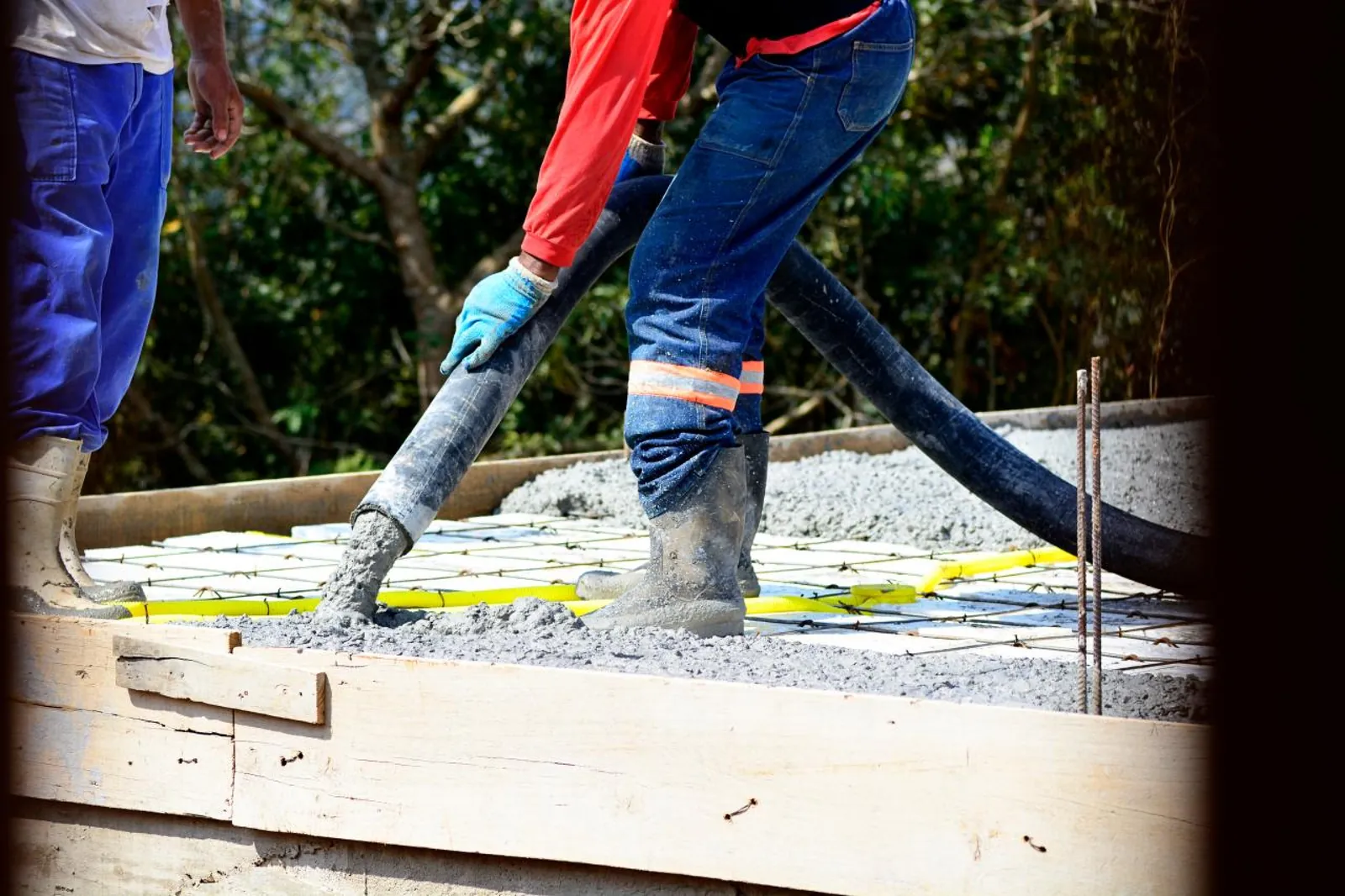
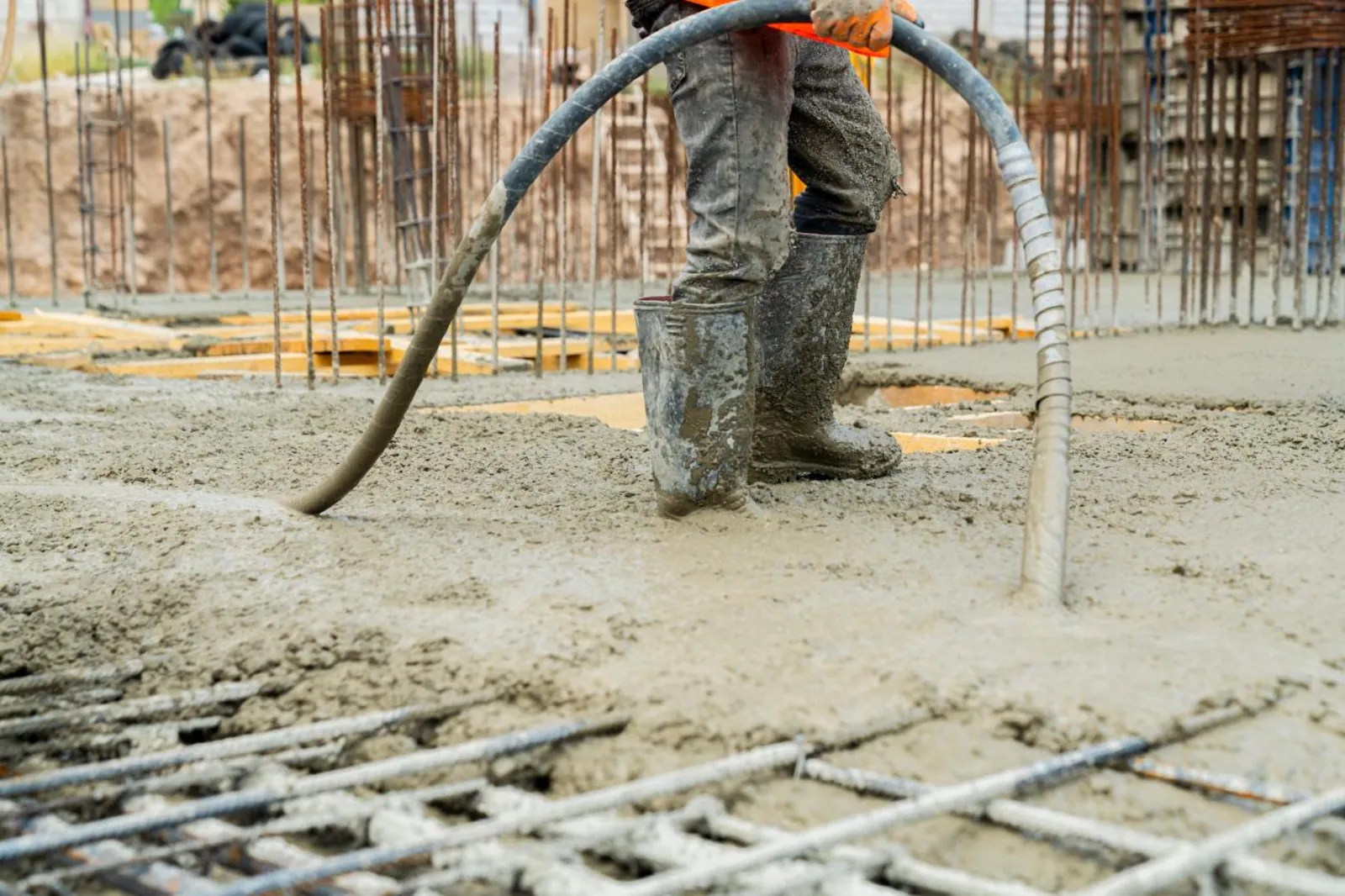
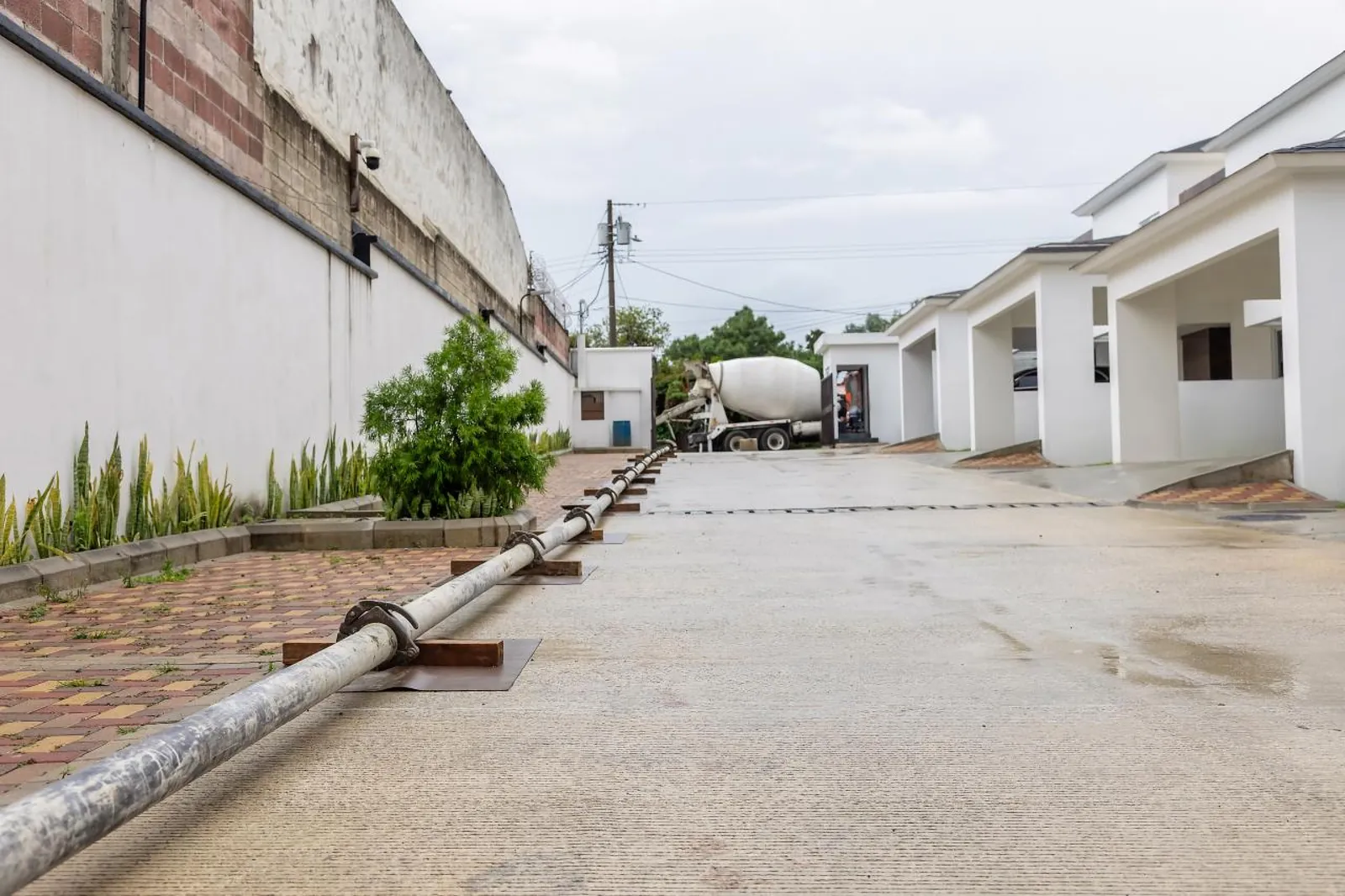
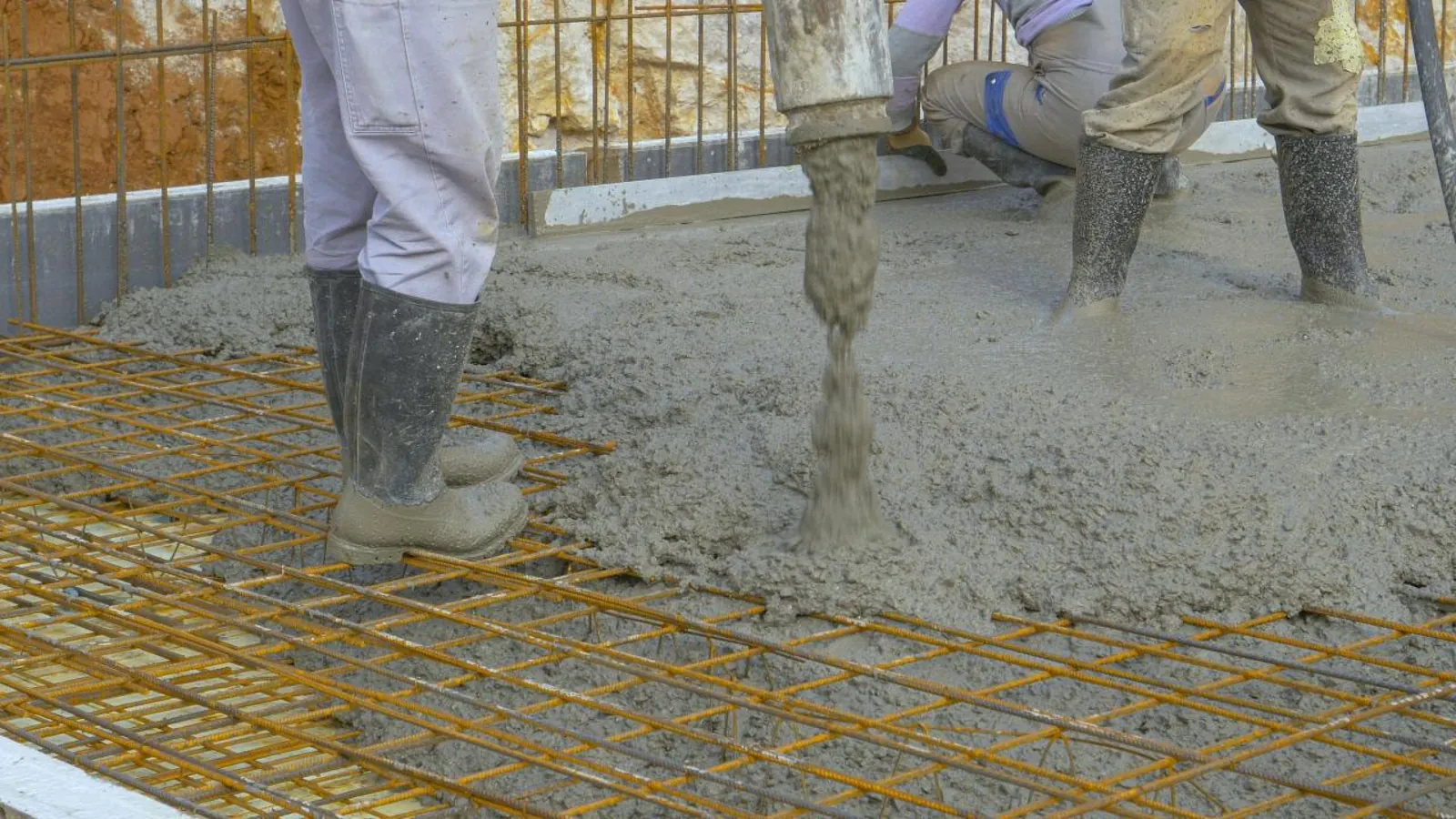
- Line pump or static pump (bomba estática): the pump pushes concrete through steel pipes and hose laid along the ground, up stairs or along scaffolding. Ours is mounted on a lorry.
- Mini or trailer pump: a smaller static pump on a trailer, usually for modest volumes and lighter work.
- Mixer pump: a mixer lorry with a small pump and short boom built in, so one vehicle brings and places the concrete.
All of them use twin pistons and a transfer valve to keep the concrete moving. If you want to know what happens inside the machine, read how a concrete pump works. The real question for your job is how the concrete gets from the road to the formwork.
How a boom pump works and where it fits best
A boom pump places concrete from the end of a folding arm, so no pipe has to be laid on the ground.
The lorry parks, extends its outriggers to stabilise itself and unfolds the boom over the pour. The concrete runs through a pipe fixed along the arm and out through a hose at the tip. On an open site the set-up is quick and the arm can reach over a building or across a wide slab.
The limits are space and weight. A boom lorry is large and heavy, needs a firm, level standing area, and its outriggers spread well beyond the width of the lorry. It also needs clear air above: overhead cables, trees and neighbouring buildings can rule it out. Reach is fixed by the length of the arm, so a pour far behind a house may simply be out of range.
How a line pump works and where it fits best
A line pump stays at the road and sends the concrete through pipes that can follow almost any route to the pour.
Our truck-mounted Putzmeister static pumps run 20 to 400 metres of line, reach up to 400 metres horizontally and up to 50 metres high, and deliver 16 to 18 m³ an hour. The operator lays the pipe from the pump to the formwork, round the house, down the garden steps, through a gateway or up the scaffold, and clamps every joint before pumping starts.
Laying line takes some time, but the lorry itself is compact and needs much less room than a boom. On this coast that matters. Many villa plots are reached by steep, narrow roads, pools sit behind houses, and old town centres have streets where a boom lorry would block everything. Our narrow access concrete pump page is built around exactly those sites.
Line pump vs boom pump compared
Line pump vs boom pump comes down to access, distance, height and the shape of the pour.
| Point | Boom pump | Line pump (truck-mounted static) |
|---|---|---|
| Space to set up | Large, firm, level area plus outriggers | Compact lorry at the roadside |
| Reach | Limited to the length of the arm | Up to 400 m horizontal, 50 m high |
| Behind houses and down gardens | Often out of reach or blocked | Line follows paths, steps and gates |
| Overhead cables and trees | Can rule it out | Not a problem for pipe on the ground |
| Set-up time | Quick on open sites | Extra time to lay and clamp the line |
| Large open slabs | Very efficient, arm moves over the pour | Works well, hose is moved by hand |
| Narrow streets | Difficult or impossible | Suited to them |
Neither machine is better in every case. The right one is the one that reaches your pour safely and lets the crew place the concrete at a steady pace.
Mini pumps and mixer pumps: when small is enough
Small pumps and mixer pumps suit modest volumes on straightforward sites.
A mini pump on a trailer can be handy for a small job with an easy route, though output and pressure are lower and long or high runs are harder work. A mixer pump combines delivery and placing in one vehicle, which works well when the pour is close to the road and the volume fits in the drum.
For many small jobs, the question is not which pump but if you need one at all. If a mixer lorry can back up to the formwork, its chute may be enough. Our guide do I need a concrete pump helps you decide.
Line pump vs boom pump: when a boom is the better choice
A boom pump is usually the better choice for large, open pours with good access, especially at height.
We prefer to say this plainly. If you are pouring a big upper-floor slab on an open building site with a level area for the lorry, a boom can place concrete across the whole deck without anyone carrying a hose over the reinforcement. The same goes for tall structures where the arm can reach over the top. In those cases a boom saves effort, and we would rather tell you that than force our pump onto the wrong job.
Operator's tip: Before booking a boom, walk the route the lorry must take. A tight bend, a steep ramp or a low cable on the way in decides more jobs than the pour itself.
On the many sites where a boom cannot stand or reach, a line pump does the job instead. For builders planning several pours, our page on concrete pumping for builders explains how we fit into a construction programme.
Why we run a truck-mounted static pump on the Costa Blanca
Most of our work is on residential plots where access, not volume, is the limiting factor, and that is where a line pump earns its place.
Hillside urbanizaciones around Altea and Jávea, terraced gardens, pools behind villas and narrow streets in old centres are everyday sites for us. Our static pump on a lorry fits where a boom does not, and the line takes the concrete the rest of the way. The same set-up suits driveways, patios and slabs, pool concrete and liquid screed on upper floors.
The pump always comes with our own operator. You hire the machine and the experience together, and we order the concrete from the batching plant and put it on the same quote. Access is one of the factors behind the price; our prices page explains the rest. If your site is tight, read concrete pumping with narrow access, and if you are preparing for the day itself, our concrete pour checklist will help.
Don and Ari came on time very clean and a pleasure to work with
Pro fix Costa blanca
Not sure which type suits your site? Send a few photos of the access to get a fixed quote, and we will tell you honestly whether our concrete pump hire is the right fit. We can usually book a pour within three working days.
Frequently asked questions
What is the difference between a line pump and a boom pump?
A boom pump places concrete from a folding arm mounted on the lorry. A line pump pushes concrete through pipes laid on the ground, so it can reach places a boom cannot, at the cost of laying the line.
Is a line pump slower than a boom pump?
Set-up takes longer because the line has to be laid. Once pumping, our pumps deliver 16 to 18 m³ an hour, and on most residential pours the pace is set by placing the concrete, not by the pump.
Can a line pump pump to an upper floor?
Yes. Our truck-mounted static pumps reach up to 50 metres high, with the line run up the scaffold or through the building.
Do you have a boom pump?
No. We run truck-mounted static line pumps, which suit the narrow access and long distances common on the Costa Blanca. Where a boom is clearly better, we will tell you.
Is a mini concrete pump the same as a line pump?
A mini pump is a small line pump, often on a trailer, for lighter work. Ours is a full-size Putzmeister static pump on a lorry, with more pressure and reach.