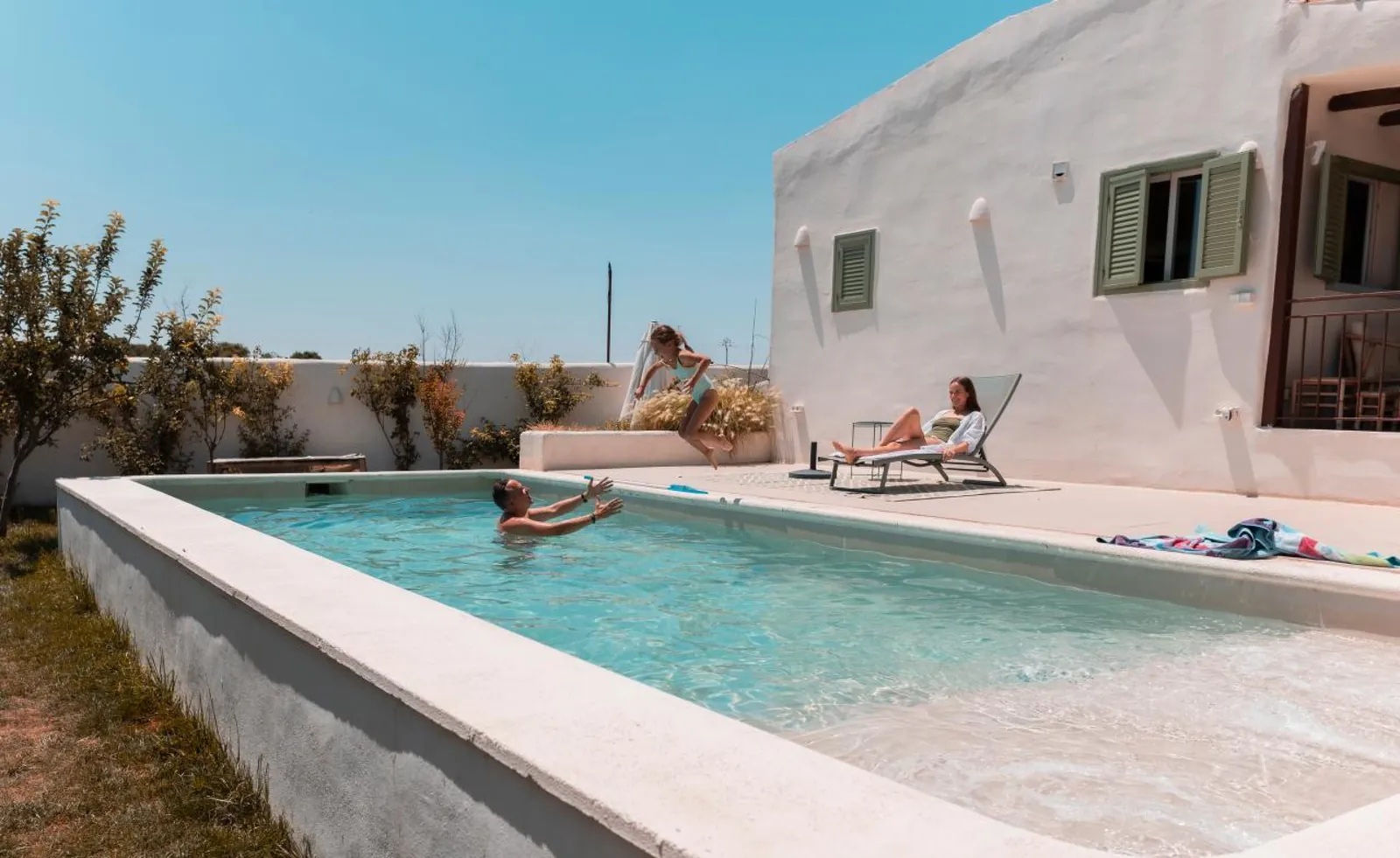
A concrete swimming pool in Spain is built in a fairly fixed order: permit, dig, floor, walls, finishes and fill. Most villa pools on the Costa Blanca are concrete, either sprayed or poured, because concrete can take any shape and lasts for decades in the sun. We pump the concrete for pool floors and walls, often to gardens a mixer lorry cannot reach, and this guide walks you through the build from the pump operator's side.
Short answer: A concrete pool is dug out, given a blinding layer, reinforced and then poured: first the floor, then the walls, either cast in formwork, built from concrete-filled blocks or sprayed. A typical villa pool takes somewhere between about 9 and 20 m³ of concrete. A pump places it from the road, round the house.
How is a concrete swimming pool built in Spain?
Concrete pools in Spain are built by one of three methods: sprayed concrete, poured concrete in formwork, or concrete-filled shuttering blocks.
Sprayed concrete (gunite)
Gunitado, sprayed concrete, is very common for pools here. A specialist pool builder sprays concrete onto the reinforcement with dedicated equipment, which suits curved and freeform shapes. That is a different machine and a different trade from ours, and the pool company organises it.
Poured concrete in formwork
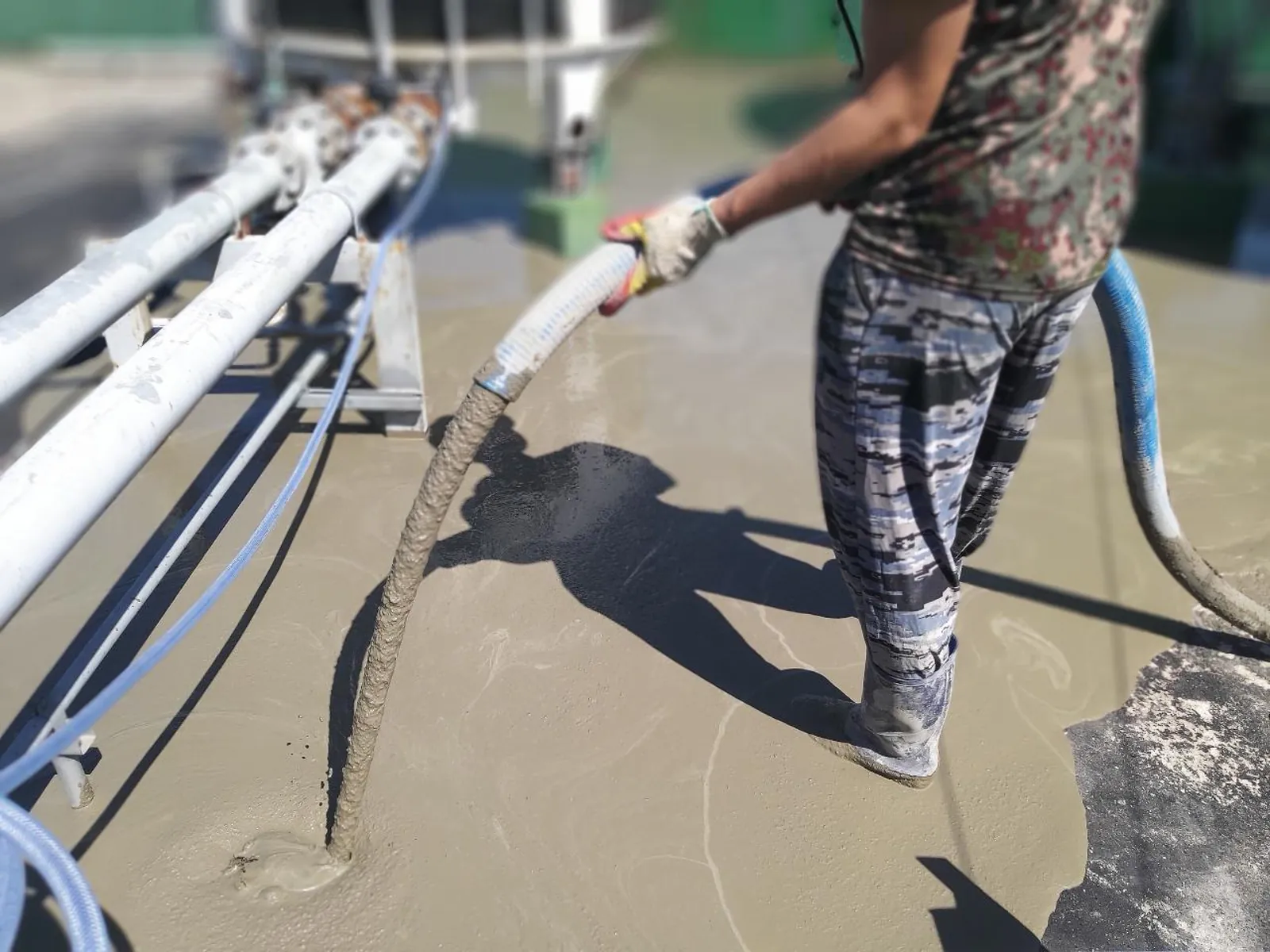
Here the floor is poured first, then shuttering is set up for the walls and the concrete is pumped in. This method gives solid, well compacted walls when vibrated properly, and it is where our pump comes in.
Concrete-filled blocks
Many builders use hollow shuttering blocks, set out on the floor slab, reinforced with steel bars and filled with concrete. The blocks act as permanent formwork. Filling them by pump is far quicker and more even than by bucket.
Whichever method you use, the floor is usually poured concrete. Our pool concrete page sets out what we supply for floors, walls and surrounds.
Building a concrete swimming pool, step by step
A typical poured or block-built pool follows ten steps from paperwork to filling.
- Design and permit. An arquitecto or the pool builder draws the pool, and you apply to the ayuntamiento.
- Excavation. The hole is dug a little larger than the pool to leave working room.
- Blinding. A thin layer of lean concrete, the hormigón de limpieza, gives a clean, level base.
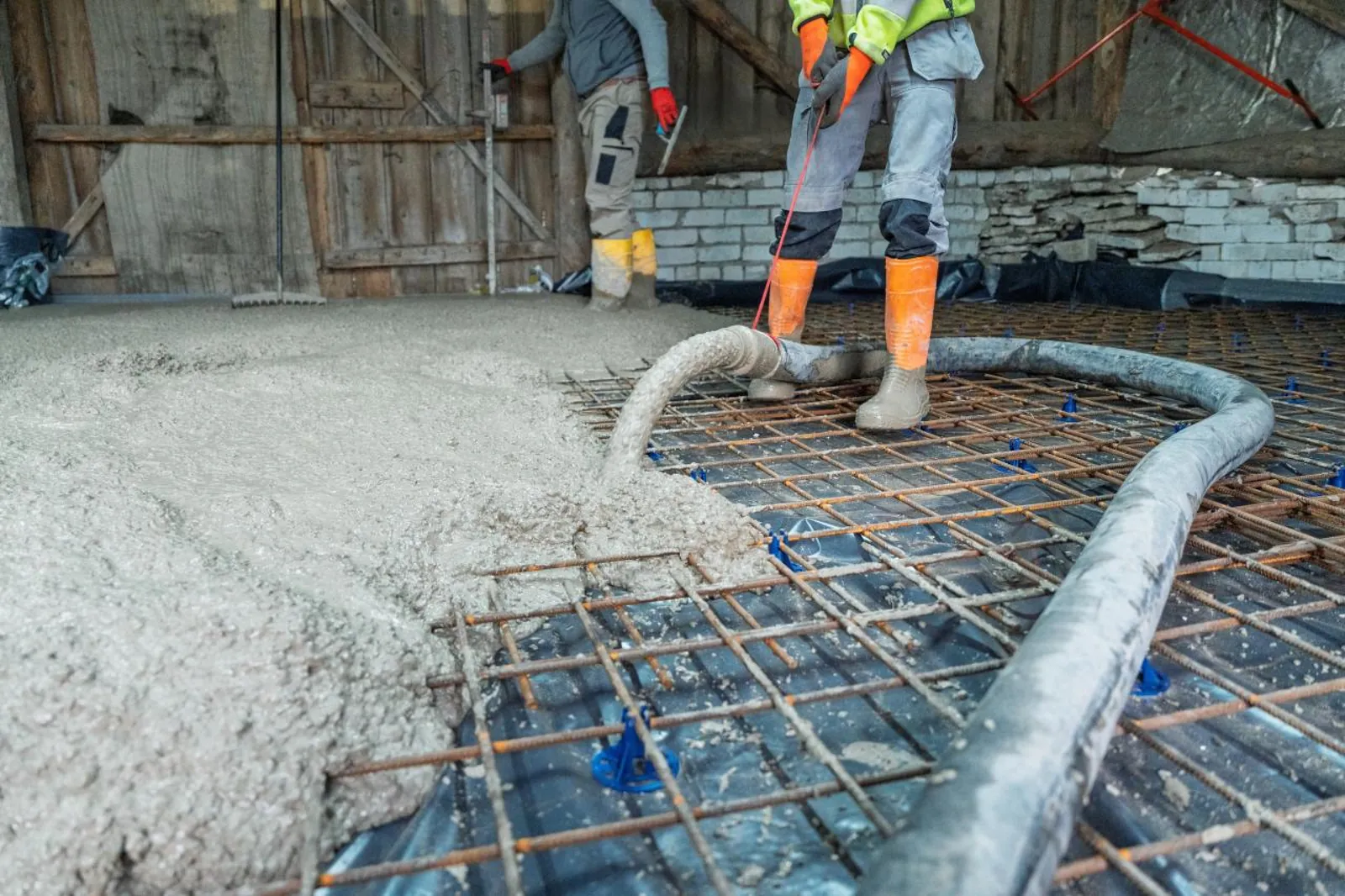
- Reinforcement and pipework. Steel for the floor, starter bars for the walls, the main drain and wall sleeves for the plumbing.
- Pour the floor. Concrete is pumped in, vibrated and levelled to the drawings.
- Build the walls. Formwork or shuttering blocks are set up and reinforced.
- Pour the walls. Concrete is pumped in layers and vibrated to remove air.
- Cure. The concrete is kept damp and protected while it gains strength.
- Finishes. Waterproof render, tiles or another finish, plus coping and plumbing.
- Surround and fill. The terrace around the pool is laid and the pool is filled.
The order matters for the concrete. Every pour must be planned so formwork, steel and pipework are complete and checked before the lorries arrive.
Pouring the pool floor and walls with a pump
A pump places the concrete exactly where it is needed, even when the pool is behind the house or below the road.
Pools are rarely next to the road. They sit behind villas, down terraced gardens or on a level below the house. Our truck-mounted Putzmeister static pump stays where the mixer lorry can stop, and the line runs up to 400 metres to the pool, round the building or down the steps. For tight plots our narrow access concrete pump page explains how we route the line.
For walls, concrete goes in layers rather than all at once, and each layer is vibrated with a poker vibrator so air bubbles come out and the concrete fills around the steel. That is what makes a pool wall dense and watertight. We can supply the vibrator as an extra, and our operator controls the flow so the formwork is not overloaded.
Operator's tip: Check the formwork ties and bracing before the pour, not during it. A wall form that moves under wet concrete is very hard to put right once the pump is running.
We order the concrete from the batching plant ourselves and put it on the same quote. For pool walls that usually means a reinforced structural mix with an aggregate size suited to the gap between the steel and the forms, as your engineer specifies.
How much concrete does a pool need?
Add the floor and the walls together: a typical villa pool needs roughly 9 to 20 m³.
The table shows example volumes for simple rectangular pools with a 20 cm floor and 20 cm walls, calculated on the outside perimeter. Real pools with steps, a deep end or thicker walls will differ, so always check against your drawings.
| Pool size | Depth | Floor | Walls | Total |
|---|---|---|---|---|
| 6 x 3 m | 1.4 m | 3.6 m³ | 5.04 m³ | 8.64 m³ |
| 8 x 4 m | 1.5 m | 6.4 m³ | 7.2 m³ | 13.6 m³ |
| 10 x 5 m | 1.5 m | 10.0 m³ | 9.0 m³ | 19.0 m³ |
Add around 5 to 10 percent margin on top. For reference, one of our real projects was 18 m³ of concrete for a pool in Alicante. If you want to work out your own figure, our guide how much concrete do I need explains the method.
Permits for a concrete swimming pool in Spain
A new pool almost always needs permission from the ayuntamiento, usually a licencia de obra or a declaración responsable.
Which one applies, and what documents you need, depends on the municipality, the size of the pool and the plot. Many town halls ask for a project from an arquitecto for a new pool. Rules on distances to boundaries and on land outside the urban area also vary. The safe route is to ask the ayuntamiento, or let your arquitecto or pool builder handle it.
We do not deal with permits ourselves, but we see the questions often. Our guide do I need planning permission in Spain gives the general picture for pools, patios and slabs.
Timing, heat and curing
Pour early in the day in summer and keep the concrete damp while it cures.
Summer on the Costa Blanca is hot and dry, and fresh concrete loses water quickly. That speeds up stiffening during the pour and can cause surface cracks afterwards. Pouring early, keeping the lorries arriving at a steady pace and protecting the concrete from sun and wind all help. Read pouring concrete in hot weather for the detail.
After the pour, the concrete needs time and moisture to gain strength before the walls are loaded, rendered or the pool is filled. How long depends on the mix and the weather, and your pool builder or engineer sets the timetable. Our guide to concrete curing time explains what happens in those first weeks.
The pool surround: patios, paths and stamped concrete
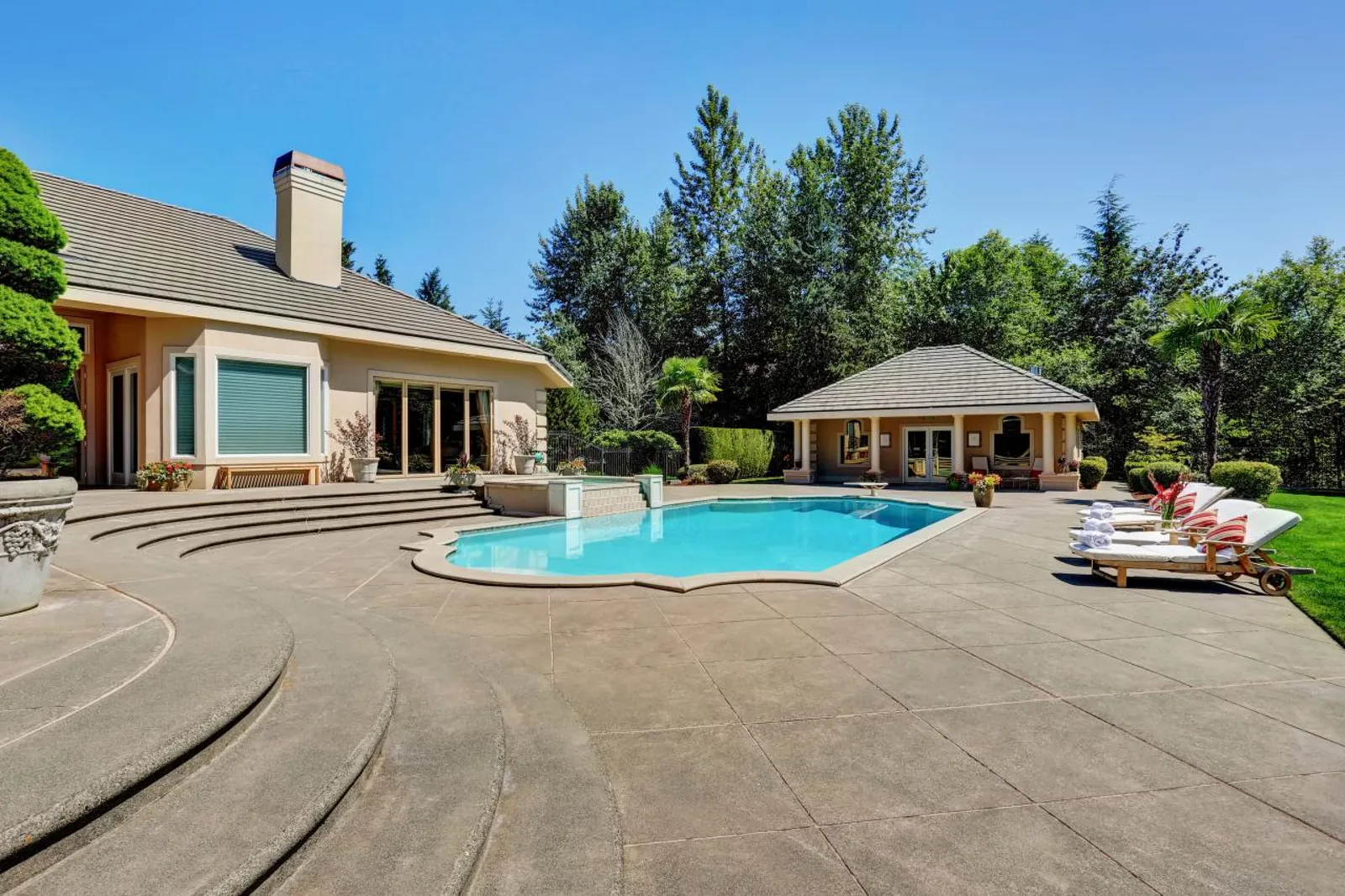
Once the shell is finished, the area around the pool is usually a concrete slab, often with a decorative finish.
Pool terraces get bare feet, water and strong sun, so a non-slip surface and a fall away from the pool matter. Many owners choose stamped concrete, which we pour and stamp ourselves on smaller areas and with a regular partner on large ones. Others prefer a brushed finish or tiles on a concrete base. Paths, steps and a driveway can often be poured on the same visit; see concrete driveways, patios and slabs.
Many pool owners on this coast live abroad part of the year and work with a Spanish builder. We coordinate directly with your builder or pool company on dates, volumes and access, so the pour day runs to plan. We pump for pools across our working area, from Jávea down to Alicante.
Our concrete pump hire always includes our own operator. The price depends on volume, line length, access, height, extras and concrete type, as our prices page explains. Send the drawings or a few photos to request a fixed price for your pool. We can usually book the pour within three working days.
Frequently asked questions
How much concrete do I need for a swimming pool?
Add the floor and the walls. A simple 8 by 4 metre pool, 1.5 metres deep with 20 cm floor and walls, needs about 13.6 m³ before margin. Your drawings give the exact figure.
Is a gunite pool the same as a concrete pool?
Gunite is concrete sprayed onto the reinforcement by a specialist. Poured and block-filled pools use concrete placed into formwork, usually by pump. Both are concrete pools.
Can you pump concrete to a pool behind my house?
Yes. Our line pump stays at the road and runs pipe up to 400 metres horizontally and 50 metres high, round the house or down the garden.
Do I need a permit to build a pool in Spain?
Almost always. Depending on the town and the pool, that is a licencia de obra or a declaración responsable. Check with the ayuntamiento or your arquitecto.
How long after pouring can a pool be filled?
That depends on the mix, the weather and the finishes still to be applied. Your pool builder or engineer sets the timetable.