Weighing up the stamped concrete pros and cons is worth doing before you commit, because once the pattern is in, it stays. On the Costa Blanca you see it on villa driveways, terraces and pool surrounds everywhere, and for good reason. But it has drawbacks too, from cracking to resealing to how hot a dark colour gets in August. This guide sets both sides out plainly.
Short answer: Stamped concrete is a strong, continuous slab with no joints for weeds, quick to lay over large areas and convincing as stone or tile. On the downside it can crack, needs resealing every few years, can be slippery when wet without a non-slip finish and is hard to patch invisibly. For large outdoor areas that take daily use, the pros usually win.
What is stamped concrete?
Stamped concrete is a poured concrete slab that is coloured and imprinted with a pattern while still fresh, so it looks like stone, slate, brick or tiles.
In Spain it is called hormigón impreso; in the UK you may know it as pattern imprinted concrete. The concrete is placed and levelled like any slab. While it is still workable, a colour hardener is worked into the surface and large mats press the pattern in. After curing, the surface is cleaned and sealed.
Smaller floors we pour and stamp ourselves. Large areas we do together with a regular partner. See our page on stamped concrete on the Costa Blanca for how we work.
Stamped concrete pros
The main advantages of stamped concrete are strength, no joints for weeds, speed over large areas and a decorative look.
- One continuous slab: no loose pavers that rock, sink or lift with tree roots.
- No weeds: there are no gaps between slabs for weeds or ants to settle in.
- Strong: a properly built slab carries cars on a driveway without problems.
- Fast over big areas: a large patio or driveway can be poured in one day, rather than laid piece by piece over a week.
- Many looks: patterns and colours can imitate natural stone, cobbles, slate or wood.
- Follows the shape: curves, steps and pool edges are easy to form in concrete.
Stamped concrete cons
The main drawbacks of stamped concrete are the risk of cracking, the need to reseal, possible slipperiness and difficult repairs.
- Cracks can appear: concrete shrinks and moves. Control joints and a good sub-base keep cracks where you want them, but no slab is guaranteed crack-free.
- Resealing: the sealer wears with sun, traffic and cleaning, and needs renewing every few years to keep the colour and protection.
- Slip: a glossy sealer can be slippery when wet, which matters around pools. A non-slip additive in the sealer helps.
- Repairs show: a patched area rarely matches the colour and pattern exactly.
- Not a DIY job: stamping has a short time window and needs an experienced team.
- Fixed look: changing the pattern later means breaking out the slab.
Operator's tip: Agree where the control joints will go before the pour. Cut in the right places, they hide in the pattern; left out, the slab decides for itself where to crack.
Stamped concrete vs paving slabs and tiles
Compared with paving and outdoor tiles, stamped concrete is quicker on big areas and weed-free, but less flexible to repair or change.
| Point | Stamped concrete | Paving slabs or pavers | Outdoor tiles on a slab |
|---|---|---|---|
| Weeds | None, no joints | Joints need upkeep | Grout lines only |
| Laying time | Fast for large areas | Slow, piece by piece | Slab first, then tiling |
| Repairs | Patches tend to show | Lift and replace single units | Replace single tiles if spares kept |
| Upkeep | Resealing every few years | Re-sanding joints | Cleaning grout |
| Cars | Good on a proper slab | Good on a proper base | Depends on tile and base |
For a plain finish instead, a brushed or power floated slab is simpler and needs no sealer. Our page on concrete driveways, patios and slabs covers those options.
Is stamped concrete slippery around a pool?
Stamped concrete around a pool can be slippery when wet if it is sealed with a gloss finish, but a non-slip additive and the right pattern reduce the risk.
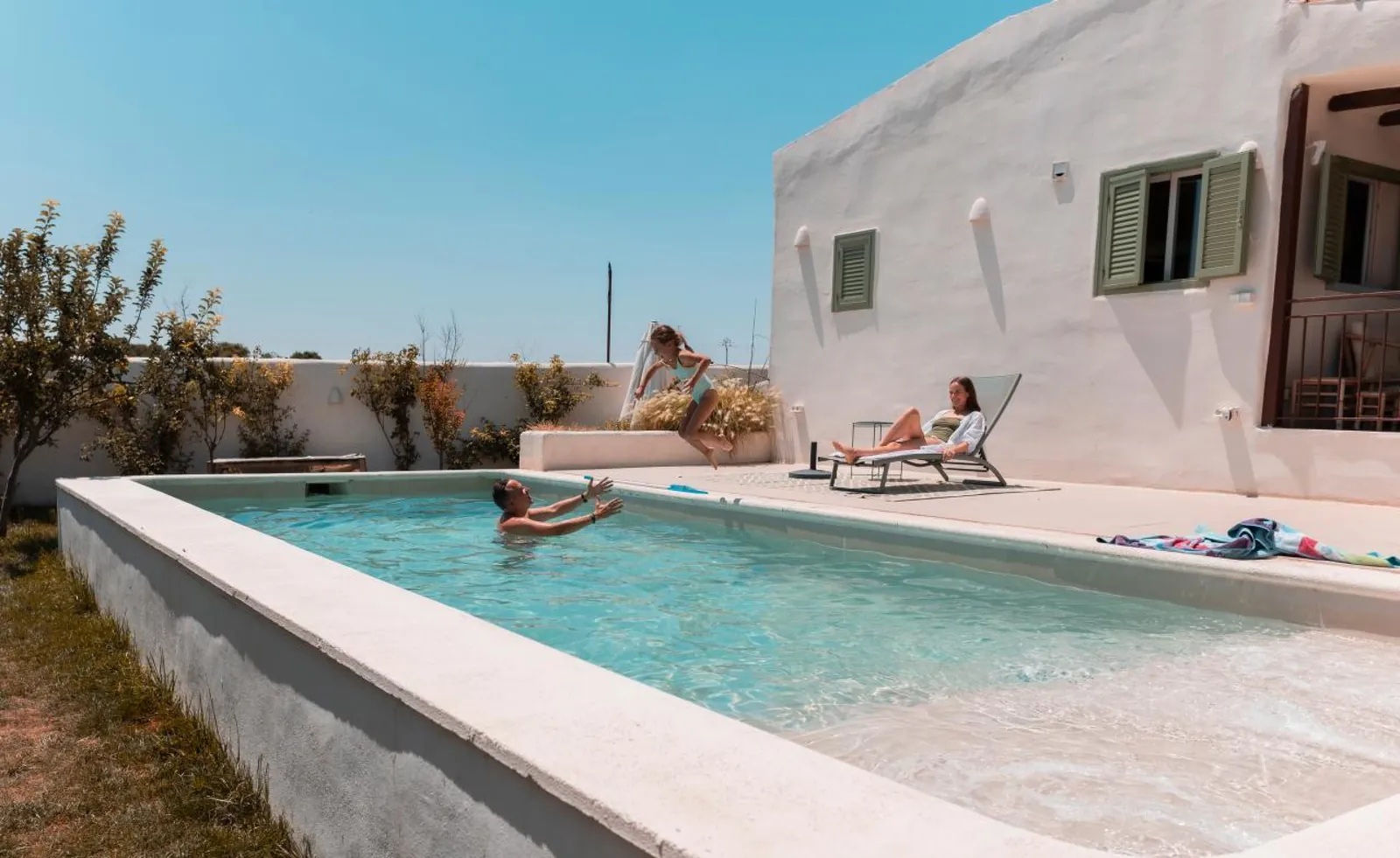
Pool surrounds see wet feet, sun cream and children running. Choose a pattern with some texture, ask for an anti-slip additive in the sealer and avoid a high-gloss finish. Agree this with us before the pour, not after. For the pool itself, see our page on concrete for swimming pools.
Heat, sun and colour on the Costa Blanca
In strong sun, darker stamped concrete gets hot underfoot and colours can fade over time without resealing.
On a south-facing terrace in summer, a dark slate colour can become uncomfortable for bare feet. Lighter sand, stone and terracotta tones stay cooler and suit the local architecture. UV also wears the sealer, so the sunniest areas usually need resealing first.
The heat affects the pour as well. Stamping has to happen at exactly the right stage, and on a hot day that window shrinks. Pour early, size the area to what the team can stamp in time and have curing materials ready. Our guide on pouring concrete in hot weather explains the timing, and concrete curing time covers the days after.
Maintenance and lifespan
A well-built stamped concrete slab lasts many years, provided it is cleaned regularly and resealed when the sealer wears.
Clean with water and a soft brush, avoid harsh chemicals and reseal when the colour starts to look dull or water no longer beads on the surface. How often depends on sun, traffic and the product used. The slab underneath matters most: a firm, compacted sub-base and the right thickness. Our guide to how thick a concrete slab should be explains what is usual for patios and driveways.
How a stamped concrete pour is planned
A stamped concrete job works best when the concrete arrives quickly and evenly, so the whole area can be imprinted at the same stage.
- The sub-base is prepared and compacted, edges formed and falls set.
- Pattern, colour, control joints and sealer are agreed in advance.
- We book the concrete at the plant, on the same quote as the pump.
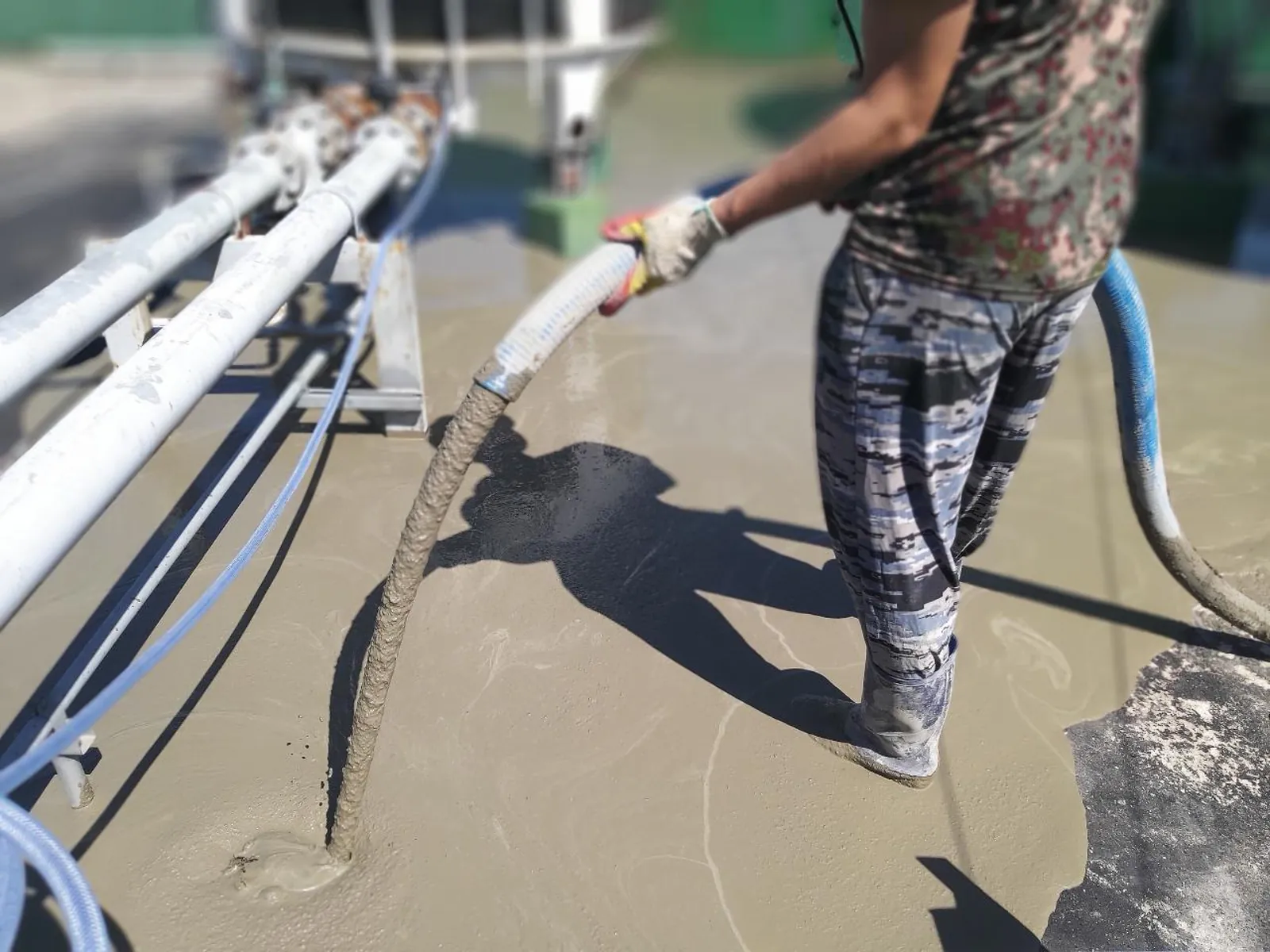
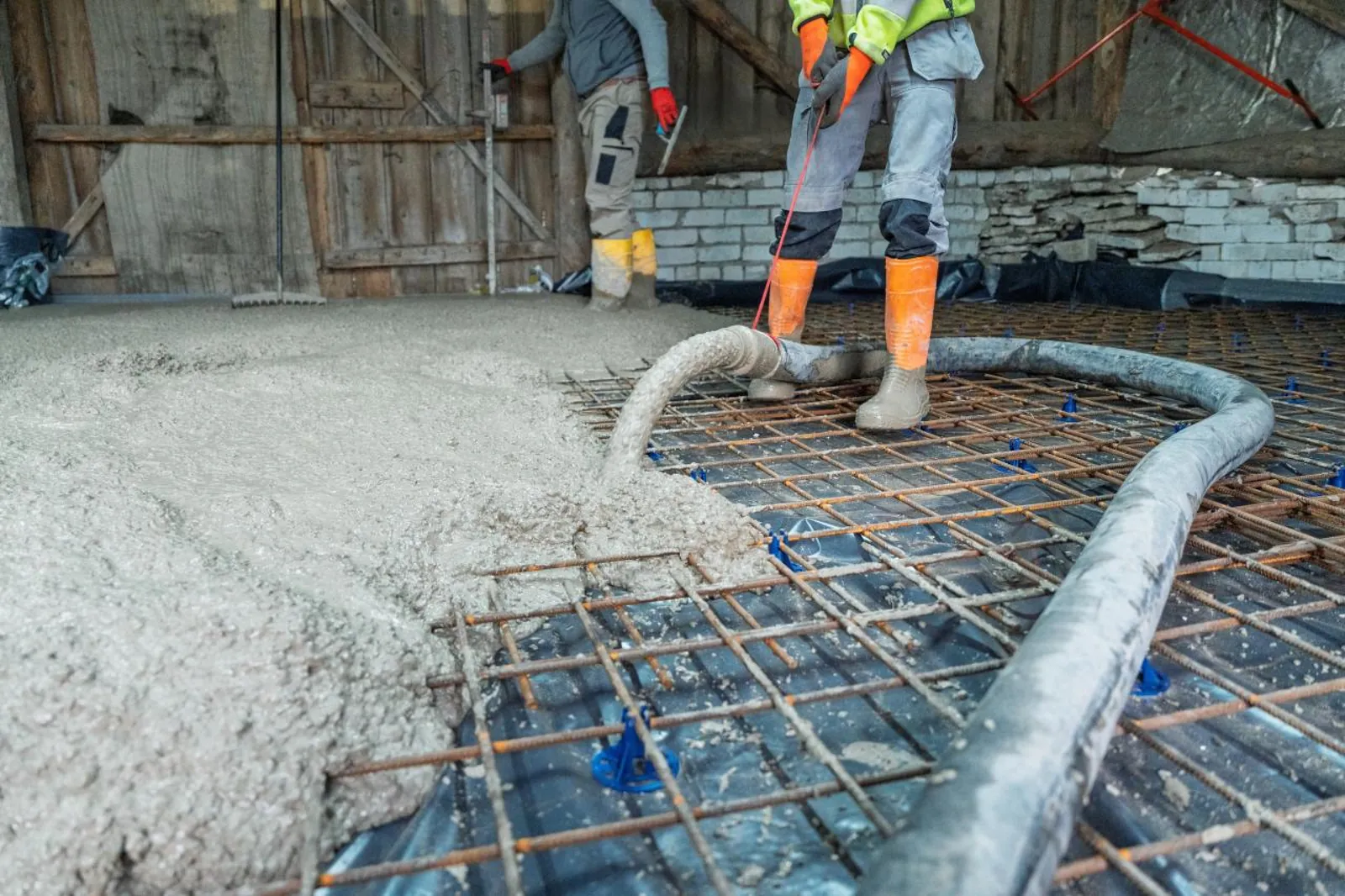
- On the day, our truck-mounted pump places the concrete in one continuous pour.
- We colour and stamp the surface, and later clean and seal it. On large areas we do this together with our regular partner.
Pumping matters for stamped work: if the concrete arrives in barrows over hours, one end sets while the other is still being poured. Our concrete pump hire with operator avoids that. On tight villa plots, our narrow access concrete pump sets up on the road and the line runs to the back. Read more in our article on concrete pumping with narrow access.
Getting a price for a stamped concrete slab
The price depends on the area, the slab thickness, the access and the pattern and finish you choose.
Measure the length and width, decide the thickness and send us a photo of the access. We give you one fixed price for the pump, operator, lines, setting up and cleaning up, with the concrete on the same quote. Our page on what concrete pump prices depend on explains every factor. Ask for a quote or WhatsApp +34 633 361 962; we can usually book within three working days. We work across the coast, from Calpe to Alicante, and installers with a run of jobs can read about our concrete pumping for builders.
Frequently asked questions
Does stamped concrete crack?
It can, like any concrete. A firm sub-base, the right thickness, fibres in the mix and well-placed control joints keep cracking under control.
How often does stamped concrete need resealing?
Every few years, depending on sun, traffic and the sealer used. Reseal when the colour dulls or water stops beading.
Is stamped concrete cheaper than paving?
It depends on the area, access, pattern and finish. Over large areas the speed of laying often works in its favour. Ask for a fixed price for your job.
Can you put stamped concrete over an old patio?
Only if what is underneath is sound. Loose tiles and soft ground have to come up first. Send us photos and we will advise.
Is stamped concrete good for a driveway in Spain?
Yes, on a properly built slab it carries cars well and suits the climate. Choose a lighter colour for sunny spots and plan resealing.