Liquid screed drying time is the question we hear most from owners and builders once the pump has gone. The screed looks finished the next morning, but walking on it and laying a floor on it are two different things. This article explains what happens in between, what affects the timing on the Costa Blanca and how to plan the trades that follow.
Short answer: You can walk on liquid screed after about one day. Before tiles, wood or vinyl go down, the screed has to dry out much further, and how long that takes depends on its thickness, the type of screed and the conditions. The screed manufacturer and your floor layer set the moment, usually after a moisture test.
What is liquid screed and why does drying matter?
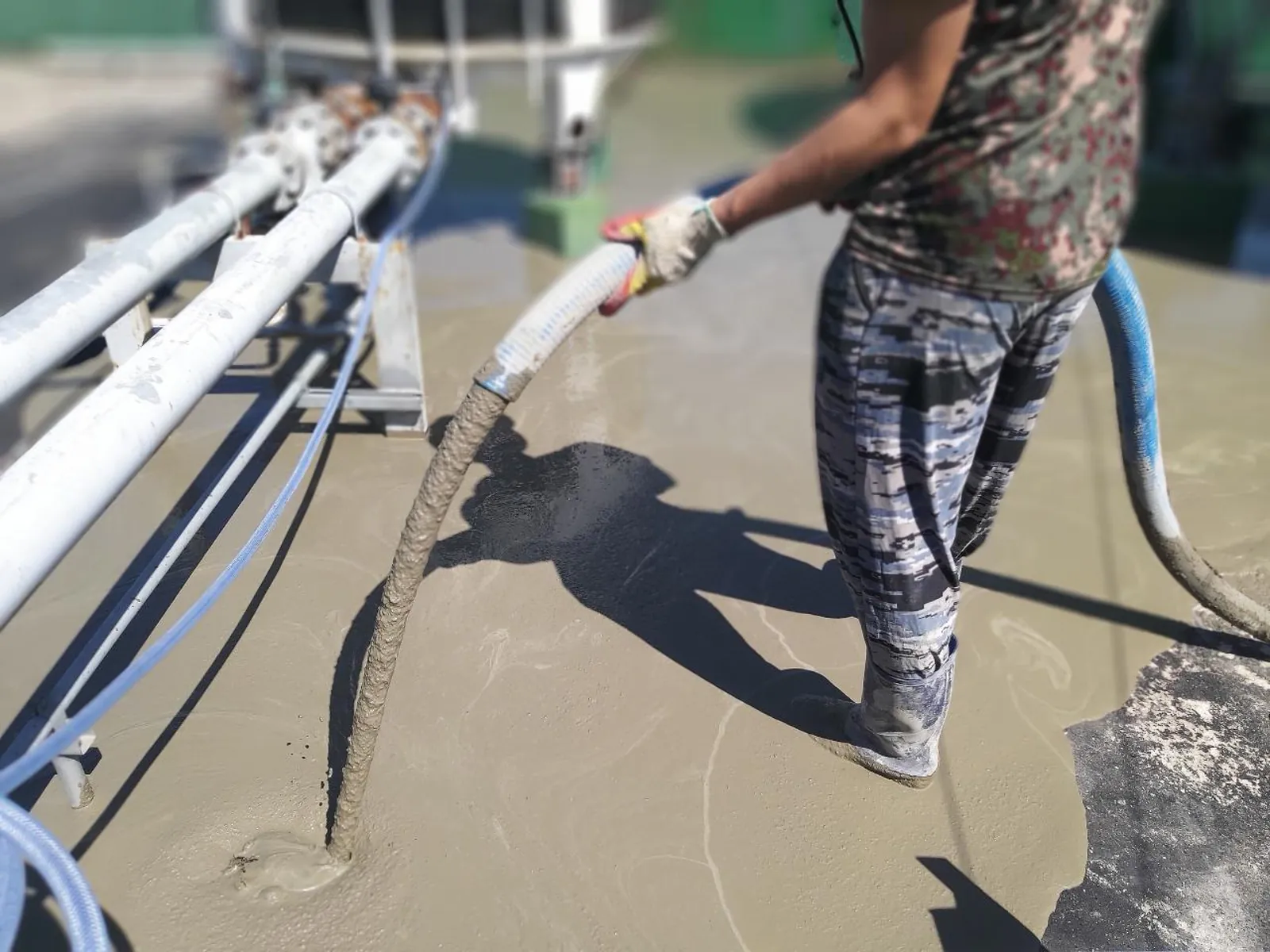
Liquid screed is a fluid, self-levelling mortar that is pumped onto the floor and settles into a flat layer under its own weight.
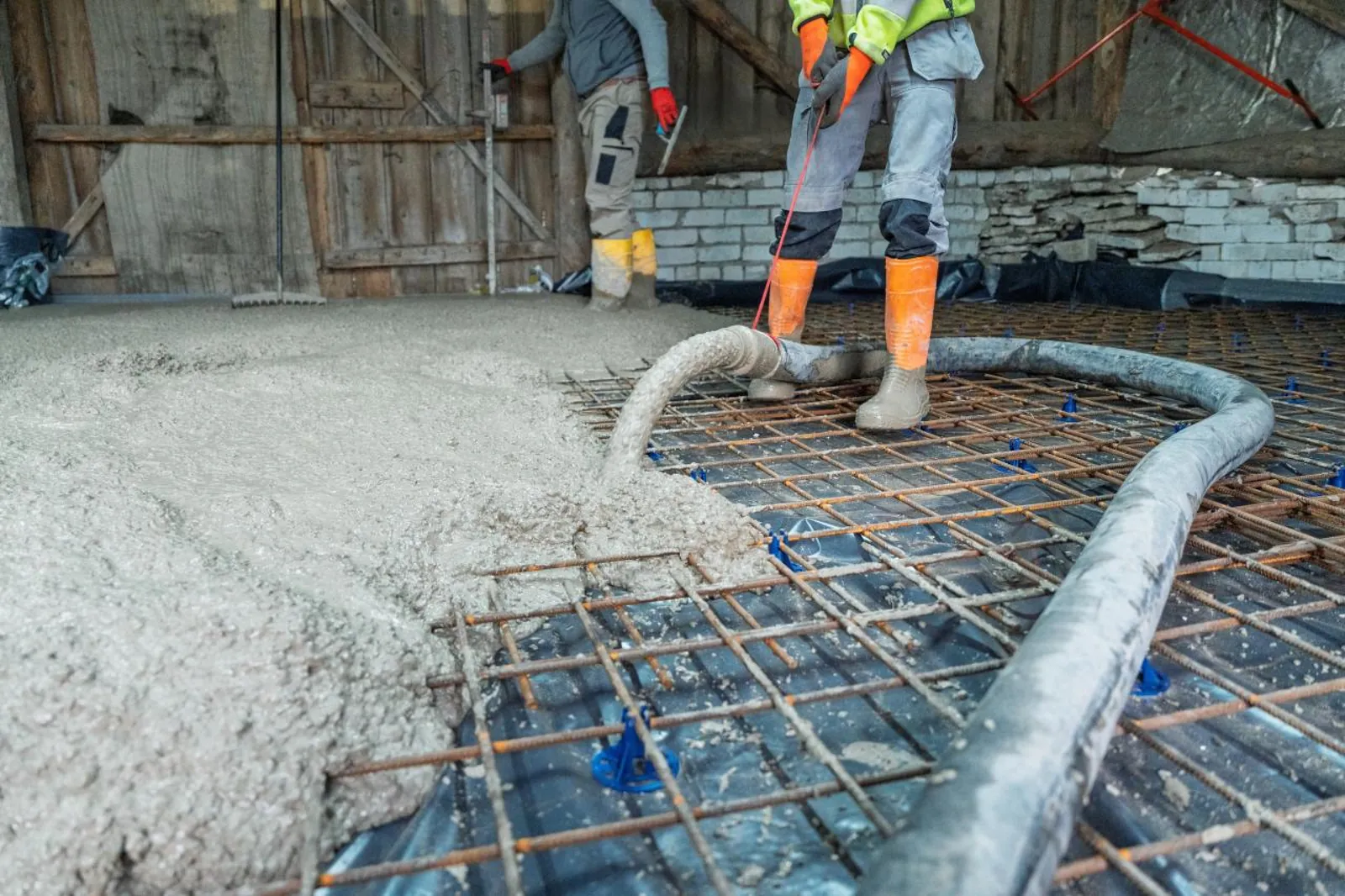
In Spain it is called mortero autonivelante. It goes down far faster than a traditional sand and cement screed and gives a flatter result, which is why builders on the coast use it for new villas, extensions and renovations. We pump it straight from the lorry into the room, even on an upper storey, with our liquid screed pumping service.
Drying matters because almost every floor finish is sensitive to moisture. Wood can swell and cup, vinyl can lift and some tile adhesives lose their grip on a screed that is still wet underneath. A screed can look and feel dry on top while holding plenty of water lower down. Outdoor work is a different story: for those, see our page on concrete driveways, patios and slabs.
When can you walk on liquid screed?
You can walk on liquid screed after about one day.
That is the point at which the surface has hardened enough for careful foot traffic, so other trades can get back into the building. It does not mean the floor can take heavy loads, scaffold towers or pallets of tiles. In the first days, keep traffic light and avoid dragging anything across the surface.
On a busy site it helps to agree a simple rule with everyone: walk on it, yes, store materials on it, not yet. Your builder or the product guidance tells you when the floor can take more.
Liquid screed drying time before you lay a floor
The liquid screed drying time before floor coverings is much longer than one day and is set by the manufacturer's guidance and a moisture test, not by the calendar.
There are two main families of liquid screed. Calcium sulphate (anhydrite) screeds are popular for their flatness and are often used over underfloor heating. Cement-based liquid screeds behave more like traditional screed. Each product comes with its own drying guidance, and the two families are not tested or prepared in the same way.
A rule of thumb you will often hear is that a screed dries roughly a millimetre a day for the first few centimetres and slower after that. Treat that as a rough idea only. The figure that counts is the moisture reading your floor layer takes before he starts, measured against the limit for the flooring and adhesive he is using.
Operator's tip: Ask your floor layer which moisture limit he works to before the screed goes down. Then everyone plans to the same target and nobody lays a wooden floor a fortnight too early.
What affects how fast screed dries?
Thickness, screed type, temperature, humidity and airflow decide how quickly liquid screed dries.
- Thickness: a thicker layer holds more water and takes disproportionately longer. This is one reason to keep the screed no thicker than it needs to be.
- Type of screed: calcium sulphate and cement-based screeds dry differently and have different limits for floor coverings.
- Temperature: warmth helps, but very fast drying in the first days can cause problems, so follow the product guidance.
- Humidity and airflow: moisture has to leave the room. A closed, humid house dries slowly. Steady ventilation helps once the manufacturer allows it.
- What is underneath: a screed laid over insulation and a membrane can only dry upwards.
To work out your volume, multiply the floor area by the thickness in metres. An 80 m² floor at 4 cm comes to 80 x 0.04 = 3.2 m³. Our guide on how much concrete you need uses the same method for slabs and footings.
Liquid screed on the Costa Blanca: heat, sun and humidity
The Costa Blanca climate speeds up drying in summer, but strong sun and draughts in the first days can do more harm than good.
Liquid screed is normally laid inside, so it is protected from direct sun. Even so, a villa with open window holes in August can turn into an oven, and a hot, dry wind through the building can dry the surface too quickly in the first hours. Most manufacturers ask for the rooms to be kept closed for the first day or two, then ventilated.
In winter the coast stays mild, so screed still dries, just more slowly. Near the sea the air can be humid, especially in older houses with thick walls. Good ventilation then does most of the work. Our article on pouring concrete in hot weather covers what the summer heat does to concrete outside.
Underfloor heating and drying
Underfloor heating can be used to help dry liquid screed, but only following the manufacturer's start-up schedule.
Liquid screed wraps completely round heating pipes, which is why it is so common over underfloor heating in Costa Blanca villas. Once the screed has gained enough strength, the heating can be brought up gradually to drive out moisture. Switching it straight to full heat is a common mistake and can crack the screed.
The schedule depends on the product. Your heating installer and screed supplier normally agree it between them, and it is worth writing it down for whoever is on site.
How a liquid screed pour runs on the day
We pump and lay the screed ourselves, with a team of two, and set the floor height with a laser.
Most pours follow the same pattern, which makes them easy to plan around:
- Your builder prepares the floor: insulation, membrane, edge strip and any heating pipes, all well fixed.
- We set out the finished floor height with a laser.
- Our truck-mounted pump stands outside and the line runs in through a door or window.
- We pump the screed, spread it to the laser height and dapple it to release air.
- We clean the pump and lines and leave the outside tidy.
Access is rarely the problem. The line runs up to 400 metres and pumps up to 50 metres high, and on tight plots our narrow access concrete pump parks where it can. For the general set-up, see our concrete pump hire with operator. We pumped 7 m³ of liquid screed in Finestrat, a typical size for one villa floor. If you are screeding several houses on a development, our page on concrete pumping for builders explains how we plan a series.
Typical drying milestones at a glance
Use these milestones as a planning guide, not as a promise, and always check the product guidance.
| Stage | What it means | Who decides |
|---|---|---|
| About 1 day | Walkable with care, light foot traffic only | Fixed figure for our screed |
| First days | Keep the rooms closed or lightly ventilated as the product asks | Screed manufacturer |
| Following weeks | Ventilate well, heating start-up if fitted | Manufacturer and heating installer |
| Before floor coverings | Moisture test against the limit for the flooring | Your floor layer |
For how the same principles work on concrete slabs, see our guide to concrete curing time.
Planning the pour and getting a price
The price for pumping liquid screed depends on the floor area, the thickness, the access and how far the line has to run.
Send us the floor area, the planned thickness and a photo of the access. We give you one fixed price for the pump, operator, lines, setting up and cleaning up, and put the material on the same quote. Our page on what concrete pump prices depend on explains every factor, and you can request a quote for your screed or WhatsApp +34 633 361 962. We can usually book a pour within three working days. If you want to prepare the site properly, our concrete pour checklist works for screed too.
When the owner, the builder and the plant all speak different languages, we keep everyone on the same page about the date, the volume and the thickness.
Frequently asked questions
How long does liquid screed take to dry before tiling?
It depends on the thickness, the type of screed and the conditions. Your tiler takes a moisture reading and checks it against the limit for his adhesive before he starts.
Can I walk on liquid screed the next day?
Yes, liquid screed is walkable after about one day. Keep it to light foot traffic and don't store heavy materials on it yet.
What is the minimum thickness for liquid screed?
We lay liquid screed from 2.5 cm. A thinner layer also dries faster, which helps in renovations where floor height is tight.
Can I use underfloor heating to dry screed faster?
Yes, but only by following the manufacturer's start-up schedule. Turning the heating straight up to full can crack the screed.
Does liquid screed dry faster in the Spanish summer?
Warmth helps, but strong heat and draughts in the first days can dry the surface too fast. Follow the product guidance on ventilation.